
News
Polyester Fabric vs Cotton: Differences and 3 Ways to Distinguish

In the realm of fashion and textile manufacturing, understanding the differences between these two fabric types has never been more crucial. When pitting Polyester fabric vs cotton, WELL FABRIC believes that each fabric holds distinct attributes, contributing to diversity and consumer choice.
Both fabrics find widespread and diverse applications across the garment industry. From everyday t-shirts to high-end fashion ensembles, Polyester and Cotton contribute to a variety of styles and materials.
Now, let’s delve into the disparities between cotton vs polyester fabric with WELL FABRIC to gain an overview of the merits and limitations of each fabric.
>>>Read more:
- Recycled Polyester vs Cotton: Which Is More Eco-Friendly?
- Comparing Rayon vs Polyester: 4 Key Factors to Consider
- Modal vs Polyester Fabric: Contrasting 13 Key Distinctions
1. Origin and Production Process – Polyester fabric vs cotton
1.1. Polyester Fabric

Chemical Composition and Origin
Polyester Fabric originates from a chemical process, mainly involving compounds like polyethylene terephthalate (PET). This synthetic fiber derives from oil and gas, undergoing a complex chemical processing that transforms PET into polyester fiber, resulting in a distinctive fabric.
Production Process
The production of Polyester Fabric begins with melting the polyester fiber at high temperatures. The molten substance is then extruded through small openings to form continuous fibers, which solidify into high-quality fabric. An outstanding trait of Polyester is its durability, maintaining its original shape even after repeated use and washing.
Durability and Shape Retention
Polyester Fabric stands out for its strength and elasticity. This characteristic ensures the preservation of the fabric’s original form, even in harsh environments or frequent usage. This quality makes Polyester Fabric suitable for products requiring resilience and uniformity in various situations.
1.2. Cotton Fabric

Natural Origin
Cotton Fabric is derived from the natural cotton plant. Cotton fibers are harvested from the cotton bolls and subsequently utilized to craft fabric products. This process creates a fabric that is both familiar and environmentally friendly.
Production Process
Cotton fibers possess a unique feature: hollow gaps along their length. These gaps expand when exposed to water, granting excellent absorbency and breathability to Cotton Fabric. To enhance durability, manufacturers often coat cotton fibers with a natural protective wax layer, rendering them water-resistant.
Absorbency and Breathability
Cotton Fabric is renowned for its excellent absorbency and high breathability. This attribute makes Cotton a popular choice among those seeking comfort and a cool sensation. Its breathability and moisture-retention capabilities also ensure that Cotton Fabric is an excellent option for tropical climates and active endeavors.
From these aspects, we gain an overview of how origin and production processes influence the unique characteristics of Polyester and Cotton Fabrics.
2. Characteristics, Pros and Cons – Polyester Fabric vs Cotton
2.1. Polyester Fabric
Advantages
Polyester fabric stands out for its durability and ability to maintain the original shape of the product. This ensures that clothes and textile products made from polyester do not shrink or deform after extended use. Moreover, polyester fabric is wrinkle-resistant, allowing you to look neat without the need for frequent ironing.
Disadvantages
One of the significant drawbacks of polyester fabric is its lack of breathability and moisture absorption. This means that the fabric cannot absorb sweat or moisture, leading to a damp and uncomfortable feeling over time. Additionally, polyester fabric can cause irritation for sensitive skin, resulting in itchiness and discomfort.
2.2. Cotton Fabric
Advantages
Cotton fabric is beloved for its soft and smooth texture, providing a comfortable wearing experience. The excellent moisture absorption and breathability of cotton help maintain a cool and dry sensation during usage. Notably, cotton fabric is skin-friendly, particularly for sensitive skin types.
Disadvantages
Despite its numerous advantages, cotton fabric also has some limitations. Cotton is prone to wrinkles and may lose its shape after washing, requiring special care to preserve its original form. Furthermore, cotton fabric can fade or lose color after prolonged use and multiple washes.
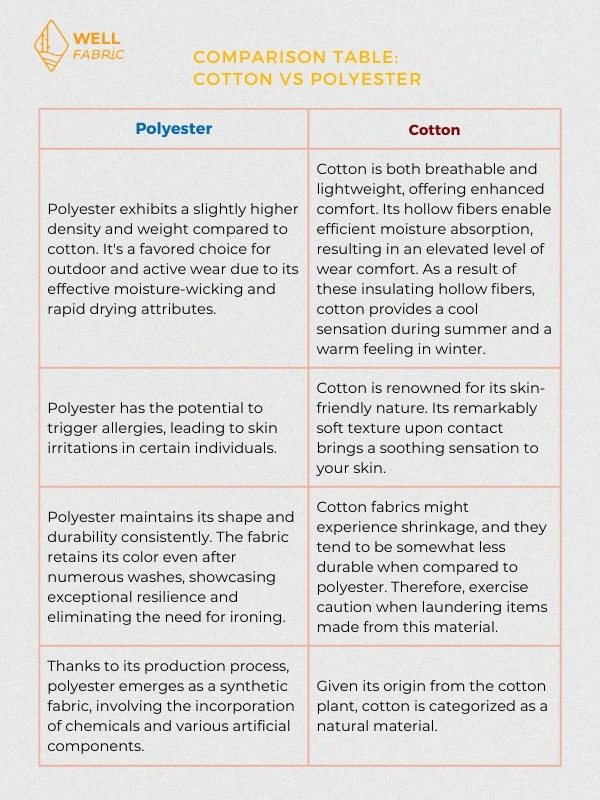
In conclusion, both polyester fabric and cotton fabric have distinct characteristics and their own set of pros and cons. The choice between these two types of fabrics depends on the intended use and personal preferences of each individual.
3. What is Polyester Blend Cotton? Why Combine these Two Materials?
In the realm of textile and garment manufacturing, the relentless pursuit of innovation and combining materials to create superior products is a top priority. Alongside the choice of 100% cotton fabric, polyester fabric blended with cotton has rapidly emerged as an intriguing and diverse option favored by many. This approach not only reduces costs but also mitigates the limitations of using 100% polyester fabric.
Depending on the specific application, manufacturers determine the appropriate ratio between cotton and polyester fibers. The higher the percentage of cotton blend, the more the product retains the familiarity of cotton and often commands a higher price due to the unique nature of cotton fibers. Common cotton-polyester blend ratios include:
+80% cotton and 20% polyester
+65% cotton and 35% polyester
+60% cotton and 40% polyester
+35% cotton and 65% polyester
From t-shirts to jeans, sportswear to professional attire, polyester fabric blended with cotton has demonstrated exceptional flexibility and adaptability across various scenarios.
Reflection:
Our growing environmental consciousness and emphasis on sustainable fashion encourage the use of natural materials. Nonetheless, we can’t immediately halt the use of poly-based products, as extreme measures might lead to counterproductive effects. Let’s advocate and implement a gradual approach by reducing the use of plastics and chemical-laden fabrics—diminishing these components from 100% to 80%, then 40%, and even down to 10%.
3.1. What is on Blend with 65% Polyester Fabric?

35% cotton blend with 65% polyester fabric, also known as TC fabric, 35/65 cotton, is one of the most popular and practical fabric types today. The secret lies in the balanced ratio: 35% natural cotton fibers and 65% synthetic polyester fibers creating a unique compatibility.
This fabric type exhibits superiority from various angles. The unique combination of cotton and polyester fibers results in high durability, affordability, and exceptional wrinkle resistance. This feature not only maintains a perfect appearance for products but also offers convenience in clothing production, bedding, and pillowcases.
With 35% cotton content, this fabric preserves the valuable characteristics of cotton, such as sweat absorption, softness, smooth surface, and good elasticity.
However, the blend with polyester fibers also brings along some effects: a slightly warmer feel when worn, reduced moisture absorption, and increased susceptibility to pilling. All these aspects need to be well understood so that you can maximize the potential of this fabric for your intended use.
3.2. What is 60% Cotton Blend with 40% Polyester Fabric?

Put simply, 60% cotton blend with 40% polyester fabric is not just a fusion of two types of fibers, but also an exemplary instance of innovation in the textile industry. Often referred to as CVC fabric, it stands out as a superior choice in the realm of contemporary cotton blend fabrics.
With over 50% cotton content, 60% cotton blend with 40% polyester fabric retains the valuable traits of cotton: softness and excellent sweat absorption.
Coupled with the 40% polyester fibers, this fabric achieves remarkable elasticity and adds a dynamic, notable stiffness.
These distinctive advantages make 60% cotton blend with 40% polyester fabric a noteworthy alternative to 100% cotton fabric without compromising product quality significantly.
However, due to its focus on higher cotton content, the cost of this fabric is somewhat comparable. Therefore, it’s often favored for creating premium fashion products that showcase elegance and quality.
4. How to Distinguish Polyester fabric vs Cotton 100%
In today’s market, there are various types of fabrics available, yet some individuals still struggle to differentiate between Polyester fabric, Cotton Poly, and 100% Cotton fabric. The following will guide you on how to distinguish these two types of fabrics so that you can make an accurate choice.
4.1. Surface Feel (Hand-Feel)
100% Cotton (left) has a matte, natural appearance and feels softer and cooler to the touch than 100% Polyester (right).
When selecting fabrics at a mill or reviewing swatches, the fastest way to estimate the fiber content is to observe the surface and feel the fabric by hand.
100% Cotton
- Matte, natural surface with little to no shine.
- Soft, smooth, and cool to the touch.
- When squeezed tightly and released, visible wrinkles remain on the fabric.
100% Polyester
- Smoother and slightly glossy under light.
- Slippery surface with lower friction.
- Wrinkles recover quickly after crumpling.
- May produce a light rustling sound when rubbed against itself.
Cotton-Poly Blend
- Feels relatively soft and comfortable, similar to cotton.
- Shows wrinkles when crumpled, but the wrinkles are shallower and recover faster than pure cotton.
- The polyester component helps the fabric maintain its shape better during handling and wear.
4.2. The Water Drop Test

A simple way to compare moisture absorbency.
A few drops of clean water can quickly reveal how a fabric interacts with moisture. The absorption speed and spreading pattern often indicate whether the fabric is made from natural fibers, synthetic fibers, or a blend of both.
100% Cotton
Cotton is naturally hydrophilic, meaning it readily absorbs moisture. When water is dropped onto the fabric, it penetrates the fibers almost immediately and spreads quickly across the surface.
100% Polyester
Polyester is hydrophobic, so it naturally repels water. Instead of being absorbed, water remains on the fabric surface as rounded droplets or rolls off with minimal spreading. This is one of the easiest ways to identify a fabric made entirely from polyester.
Cotton/Poly Blend
Cotton/poly blends still absorb water because of their cotton content, but at a slower rate than 100% cotton. The water gradually penetrates the fabric and spreads over a smaller area, reflecting the balance between cotton’s absorbency and polyester’s water resistance.
4.3. The Burn Test
A quick way to identify fabric fibers.
The burn test helps distinguish natural and synthetic fibers by observing the flame, odor, and residue left after burning. Always test a small fabric swatch in a safe, well-ventilated area.

5. Applications and Considerations – Polyester fabric vs cotton
5.1. Applications of Both Fabric Types
Both Polyester fabric and Cotton have extensive applications in the fashion and interior industries.
Polyester fabric finds common use in producing t-shirts, sportswear, jackets, and various other clothing items. Notably, its ability to maintain its original shape, resist wrinkles, and avoid shrinking makes it a popular choice for products requiring durability and easy maintenance.


For Cotton, popular applications include dress shirts, sweaters, jeans, and even home furnishings like bed linens and pillows. Cotton’s excellent absorbency and breathability make it suitable for items needing breathability and comfort.
5.2. Choosing the Right Fabric
When selecting the appropriate fabric, it’s crucial to consider the intended use and personal preferences. If durability and wrinkle resistance are important, Polyester fabric may be the right choice. However, if you seek softness and breathability, Cotton fabric might be more suitable.
Furthermore, fabric choice should also take into account sustainability and environmental friendliness. Cotton is derived from natural sources and is biodegradable, making it a good choice for those concerned about the environment. On the other hand, Polyester fabric is produced from synthetic chemicals and is difficult to degrade, so consider sustainability criteria when making your choice.
6. Are There Alternatives to 100% Cotton and Cotton/Poly Blends?
Not every brand has to choose between 100% Cotton and Cotton/Poly blends. Today, many fashion brands are looking for materials that balance cost, comfort, and sustainability while remaining 100% cotton.
One of the newest developments from Bao Lan Textiles is Cotton+.
Cotton+ is a 100% cotton yarn made from:
- 70% Virgin Cotton
- 30% Recycled Cotton
Cotton+
An innovative material developed by W.ELL Fabric
Because the fiber content remains 100% cotton, Cotton+ retains the natural softness, breathability, and moisture absorbency of conventional cotton. By incorporating 30% Recycled Cotton, it also reduces the use of virgin cotton and can support GRS (Global Recycled Standard) certification for qualifying developments.
Bao Lan Textiles is preparing Cotton+ yarn stock, enabling faster development of custom knitted fabrics. A stock color collection is also planned to help brands shorten product development and sourcing lead times.
Hotline: (+84) 857 902 535
Website: wellfabric.com
>>> Read more:
- Unveiling the Truth: Polyester vs Recycled Polyester Fabric
- 4 Ways to Differentiate Knitted and Woven Fabrics Easily


