


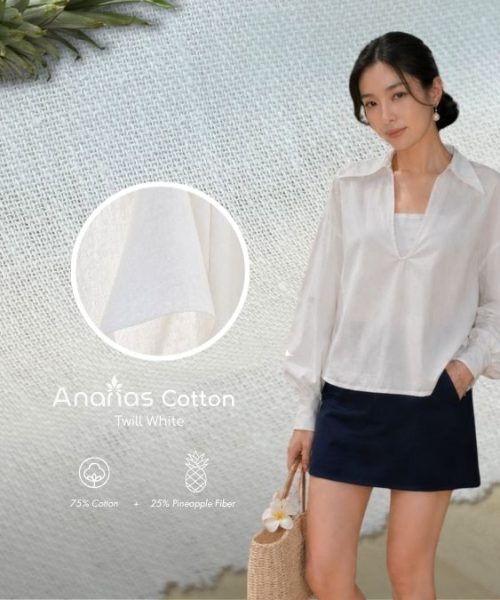
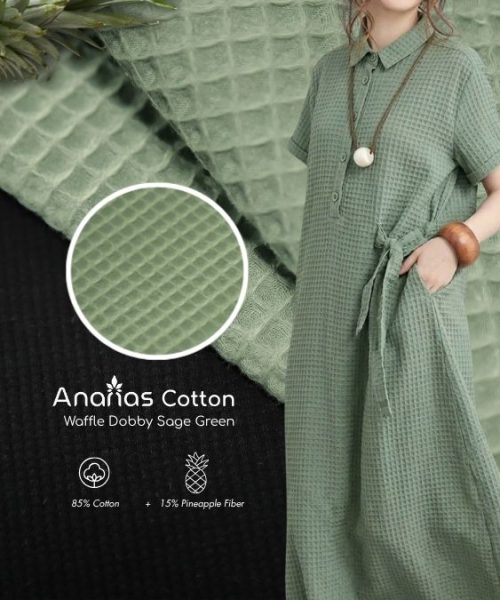


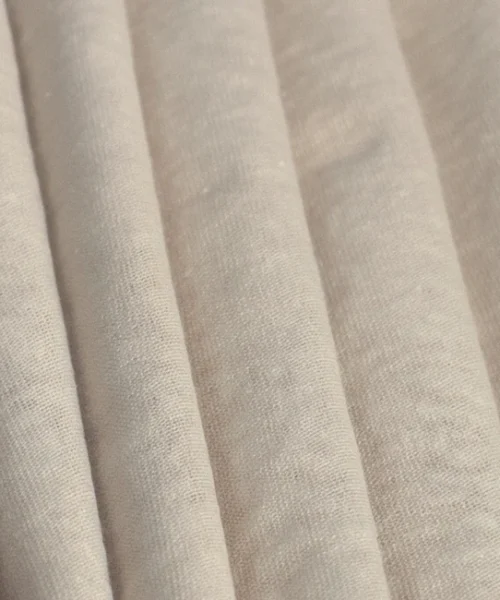
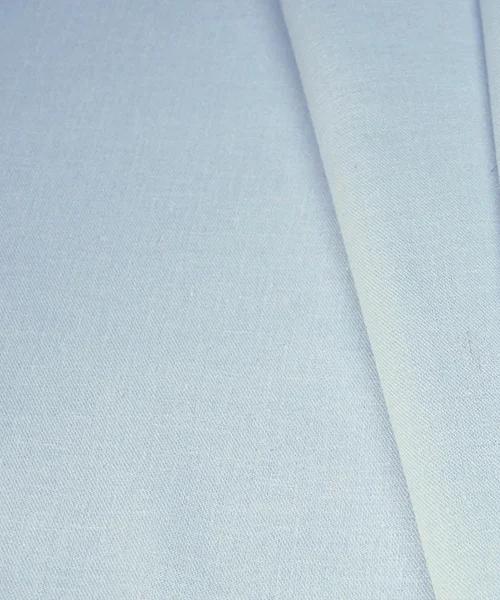

Are you looking for a new eco-friendly material to enrich your fashion collection, elevate your brand value, and gain a competitive edge in the market? Ananas pineapple fiber fabric is the perfect choice!
Produced entirely in Vietnam using a closed-loop process and exclusive “cottonization” technology, pineapple fiber is transformed into blended Ananas yarn, which is then woven into fabric on a large scale. This fabric meets a variety of needs, from fashion and textiles to interiors and accessories. Join W.ELL Fabric – Bao Lan Textile as we explore the production process, outstanding advantages, and real-world applications of this eco-fabric.
1. What is Ananas fabric, and how does it differ from traditional pineapple fabric?
Pineapple fabric, once a luxury symbol of Southeast Asia in the 17th century, faded away due to its complex production and high cost. However, with today’s “Green Living” movement, this fabric has made a comeback. Vietnam quickly joined this trend with the creation of Ananas fabric, a groundbreaking step in the textile industry.
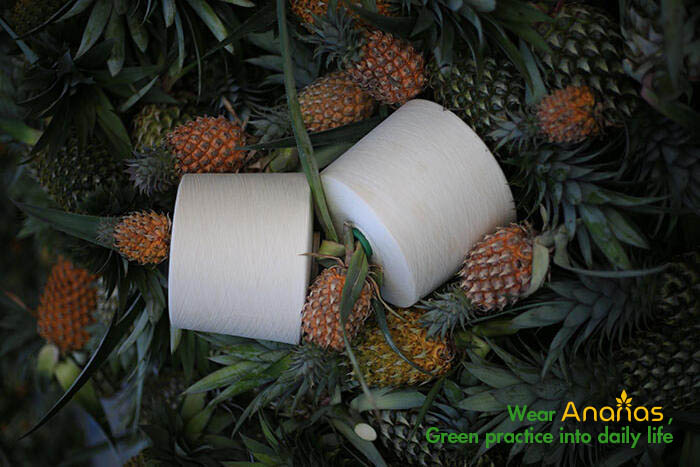
Ananas fabric, made using non-traditional methods, is the result of three years of research and development by Bao Lan Textile’s R&D team, along with pineapple fiber partners, even during the global pandemic. Ananas meets the demand for sustainable materials while enhancing the value of the end product.

Ananas also complies with transparency standards – a key requirement for international fashion brands – offering a unique, eco-friendly material that is ready to serve the mass market.
2. How Does Mass Production of Ananas Pineapple Fiber Fabric in Vietnam Benefit Consumers?
Ananas pineapple fiber fabric, a pioneering product in Vietnam’s textile industry, stands out for its large-scale production process, which saves time and effort compared to traditional pineapple fiber fabrics.
Unlike traditional methods, Ananas fabric is produced by recycling natural pineapple resources into textile fibers through a modern closed-loop process. This makes it Vietnam’s first eco-friendly fabric produced at scale with full transparency in its sourcing.
2.1. Ananas Fabric Production Process
- Harvesting Pineapple Leaves: The process begins with partnerships between Ananas and farmers or cooperatives in provinces like Điện Biên, Ninh Bình, Thanh Hóa, Nghệ An, and Tiền Giang to harvest pineapple leaves. This utilizes natural pineapple resources post-cultivation.
- Extracting Raw Pineapple Fiber: After harvesting, the leaves are semi-automatically processed to extract raw fiber at the local source using automated fiber extraction lines developed by Ecofa Vietnam. This process is chemical-free, environmentally safe, and ensures only long, evenly colored fibers are retained.
- Cottonizing Raw Fiber: The raw pineapple fiber is transported to the factory, where it undergoes the cottonization process (cottonized fiber). This critical step removes impurities such as hemicellulose, lignin, and pectin. Specialized equipment is used to cut, card, and process the raw fiber, producing cottonized fiber with quality comparable to cotton in terms of length, fineness, durability, and moisture.
- Large-Scale Pineapple Fiber Production: This step is crucial for producing pineapple fiber at a large scale. Previous manual methods couldn’t generate enough high-quality fiber ready for spinning and blending. Thanks to Ecofa Vietnam’s advancements in machinery and processes, large-scale production is now possible, marking a breakthrough in the industry.
- Spinning and Blending: Once cottonized, the pineapple fiber is spun by Greenyarn (Bao Lan Textile’s eco-friendly yarn brand). Ananas fiber can be blended with other eco-friendly fibers such as organic cotton, silk, wool, and bamboo Biocell, resulting in a variety of textile products.
- Weaving Finished Fabrics: Ananas fiber can be woven into various popular fabrics, including denim, knitwear, towels, woven fabrics, and jersey. These products cater to diverse sectors, from apparel and accessories to home textiles and interior decoration.

With its modern, sustainable production process, Ananas pineapple fiber fabric offers superior quality products that meet the growing market demand for eco-friendly materials and serve a wide range of everyday applications.
2.2. Advantages of Ananas Pineapple Fiber Fabric Sourced from Vietnam
- 100% Natural Materials from Vietnam: Ananas fiber fabric is made from natural pineapple fibers harvested from Vietnamese pineapple farms, ensuring a completely pure and locally-sourced material.
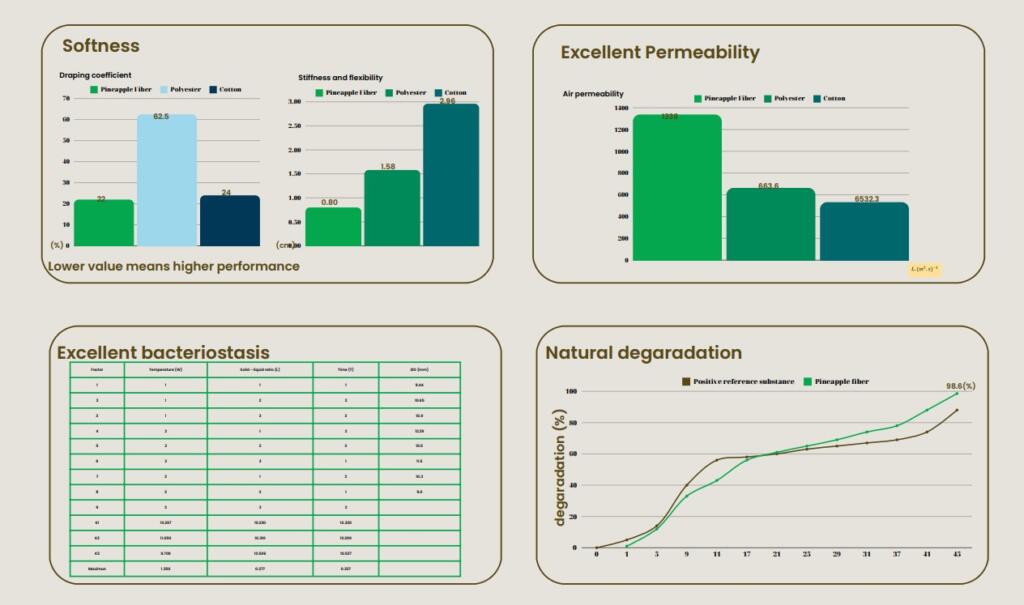
- Chemical-Free Fiber Extraction: The fiber extraction process is entirely chemical-free, preserving the natural properties of raw pineapple fibers as they are transformed into “cottonized pineapple fiber”. This makes Ananas fibers stronger, smoother, longer, and more uniform compared to manual methods. As a result, Ananas fabric is softer, more elastic, and more durable than fabrics produced through traditional extraction techniques.
- Environmentally Friendly: Ecofa, the exclusive production partner, works directly with farmers in multiple provinces to ensure the production process is eco-friendly. Mechanical methods like cottonizing and fiber extraction help protect the ecosystem, making Ananas a sustainable fabric choice.
- Transparent Sourcing: Ananas fiber fabric is produced entirely in Vietnam, allowing for quality customization and R&D tailored to specific brand requirements. This transparency ensures the best user experience and guarantees that the fabric meets the precise needs of the market.
2.3. Superior Features of Ananas Fabric Compared to Handcrafted Pineapple Fabric
Disadvantages of Handcrafted Pineapple Fabric: Handcrafted pineapple fabric, made from stiff pineapple fibers and using rudimentary tools, tends to have a rough, dry surface that lacks softness, even though it may appear thin and durable.
Advantages of Ananas:
- Large-Scale Production Process: Ananas pineapple fabric is produced through a large-scale manufacturing process that addresses the shortcomings of handcrafted pineapple fabric. The processed pineapple fibers meet quality standards and can be blended with other eco-friendly fibers, such as organic cotton, silk, wool, and Biocell bamboo, providing flexibility in adjusting the fabric’s softness, stiffness, or drape.
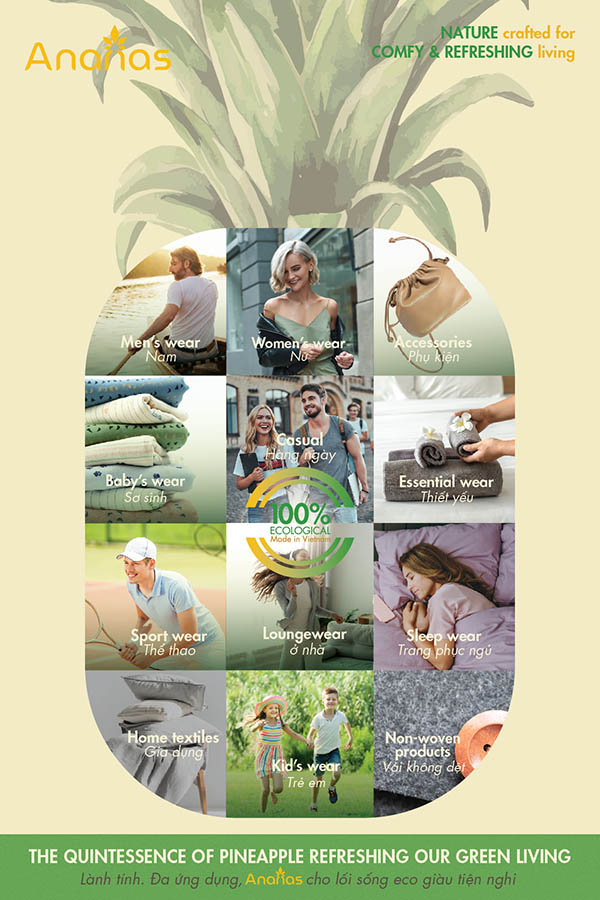
- Diverse Applications: Ananas can be woven into various popular fabric types, including denim, jersey, terry cloth, woven fabrics, and knit fabrics.
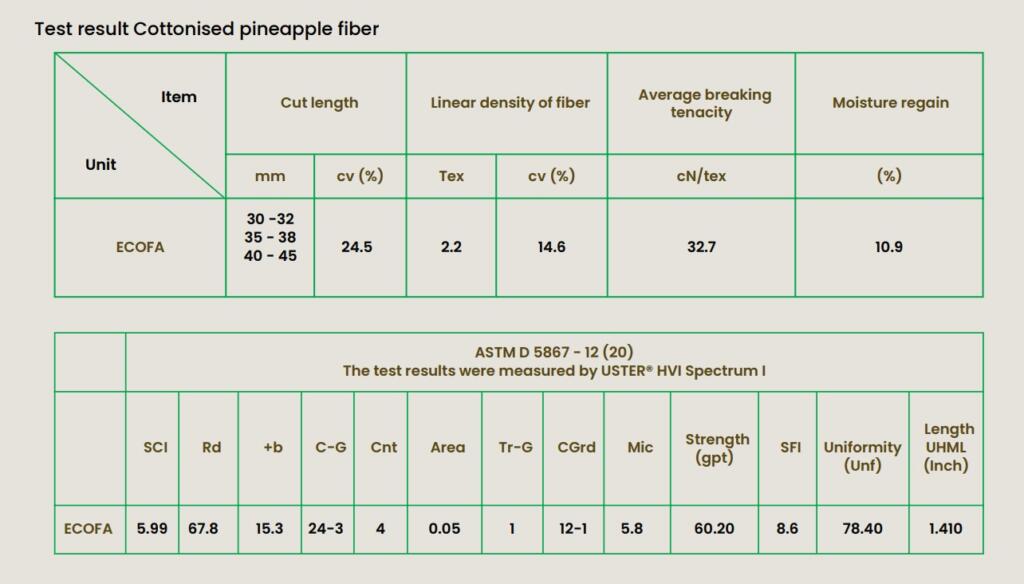
- High Tensile Strength: Ananas fibers are stronger and more durable than other natural fibers, making them ideal for creating apparel and accessories that require long-lasting durability.
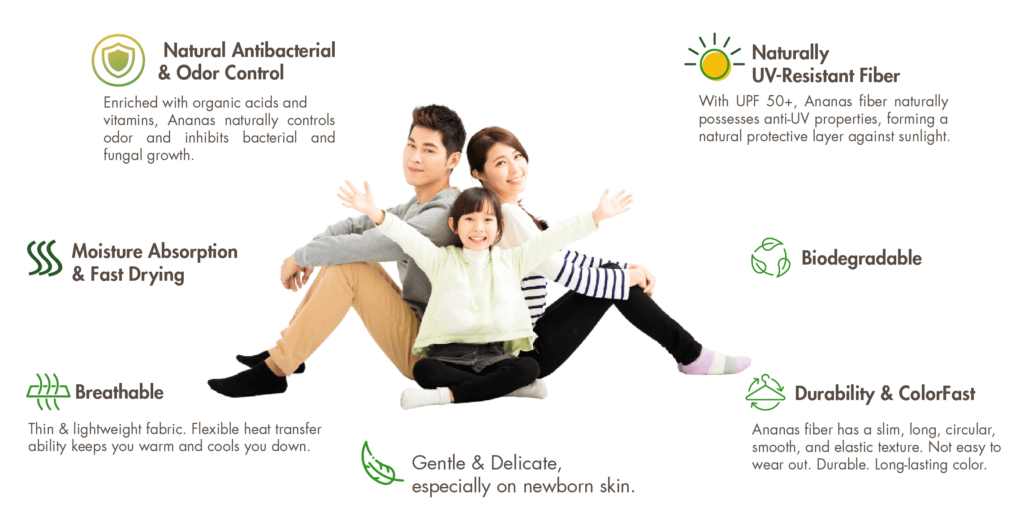
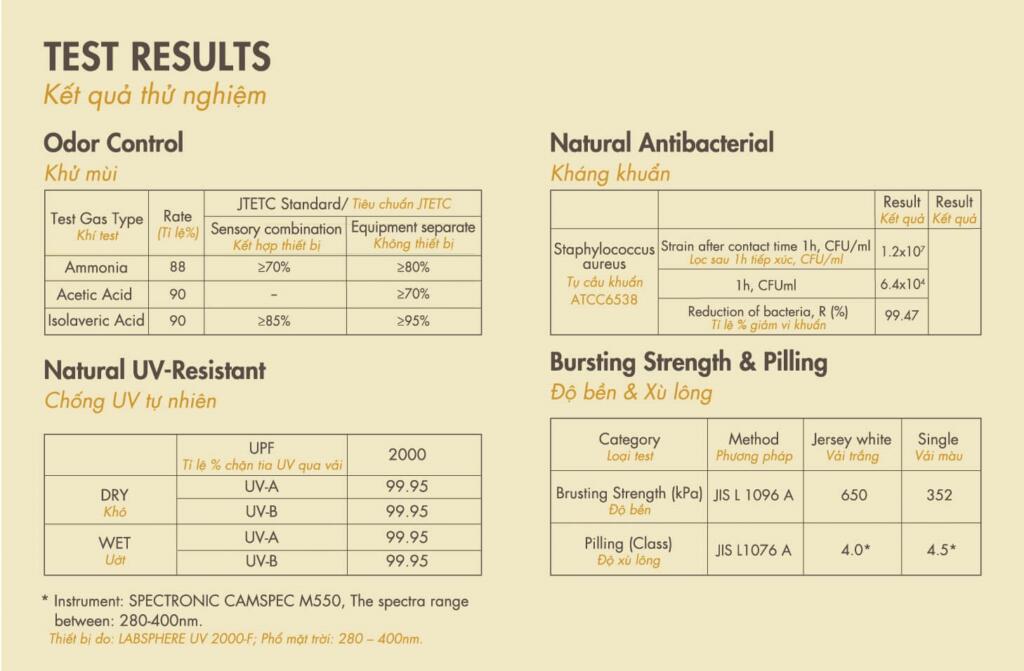
- Odor Neutralization and Antimicrobial Properties: Ananas effectively neutralizes odors (88% of ammonia odors, 90% of sour smells, and 90% of unpleasant odors) and resists bacteria and mold.
- UV Protection: Ananas fabric naturally offer a UPF 50+ UV protection rating, effectively shielding against harmful sun exposure.
- Colorfastness and Wrinkle Resistance: The fine, round, and elastic texture of the fibers allows the fabric to retain its color longer and resist wrinkles more effectively than handwoven pineapple fabric.
- Breathability and Moisture-Wicking: The lightweight fabric transfers heat flexibly and dries quickly, making it well-suited for tropical climates.
- Eco-Friendly: The fabric is naturally biodegradable.
These features have been certified by the Textile Research Institute of Ho Chi Minh City (VTRSI-TTC) and the Nissenken Testing and Research Institute (Japan).

3. Opportunities for Eco Fashion Brands: Sourcing Ananas Fabric
If sustainability is a key strategy for your brand, choosing eco-friendly materials is just the first step. We are proud to offer Ananas as a versatile option for both commercial fashion and modern ready-to-wear designs. The Ananas eco-fabric brings exceptional benefits to the table:
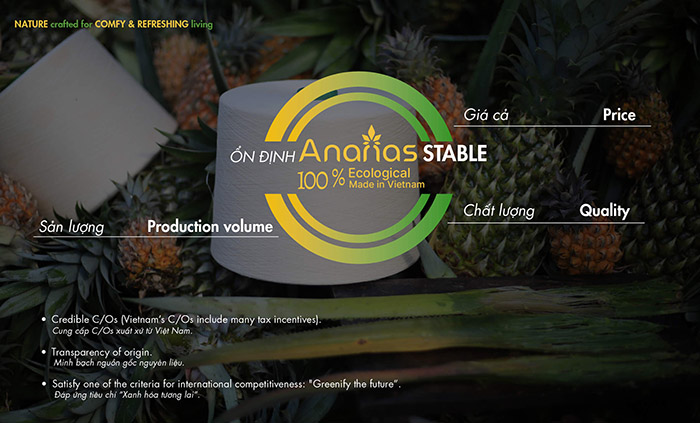
- Transparent Sourcing: Sourced entirely from Vietnam, with clear certificates of origin (C/Os).
- Supporting Farmers: Boosting income and improving the quality of life for Vietnamese pineapple farmers.
- Reducing Agricultural Waste: Helping control and minimize agricultural waste while enhancing soil health.
- Contributing to the Circular Economy: Ananas actively supports the local economy.
- Customizable Quality: Made entirely in Vietnam, allowing brands and designers to tailor quality and R&D timelines to their specific needs.
- Flexible Applications: Ananas fibers can be blended with other eco-friendly fibers such as organic cotton, recycled fibers, silk, wool, and Bamboo Biocell.
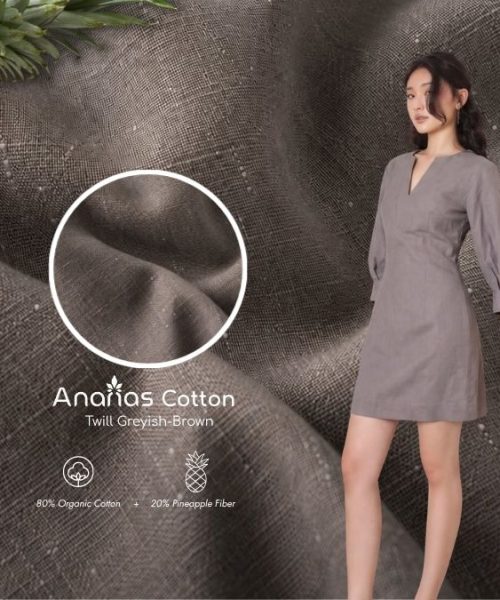
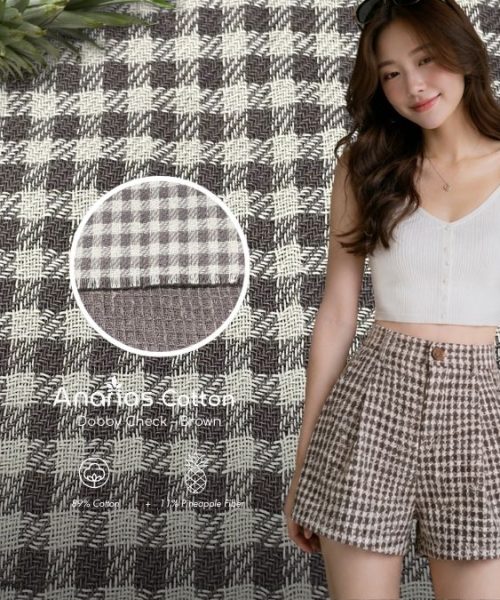
Ananas is compatible with a wide range of textiles and fabrics, from denim, knitwear, and terry cloth to woven and non-woven fabrics. The fabric serves multiple industries, including fashion (workwear, sportswear, party attire), accessories (scarves, hats, shoes, bags), home textiles (towels, tablecloths, napkins), and interior decoration (curtains, bedding, pillows).
Ready to introduce a fresh, sustainable material to your fashion line or design? For consultation and detailed pricing on pineapple fabric, feel free to contact us via phone at (+84) 857902535 (Zalo/WhatsApp) or email hello@wellfabric.com.
W.ELL Fabric, an eco-friendly fabric brand under Bao Lan Textile, is a trusted supplier of high-quality, large-scale Ananas fabric. With a fully Vietnamese supply chain, Bao Lan Textile is ready to produce and supply Ananas fibers and fabrics to serve a variety of sectors, including fashion, apparel, accessories, home textiles, and interior design.
W.ELL Fabric and Bao Lan Textile are committed to transparency in sourcing, providing full certificates of origin (C/Os) from Vietnam.


