

Sleep plays a foundational role in an infant’s cognitive, immune, and emotional development, a point consistently emphasized by the American Academy of Pediatrics (AAP). As parents become more discerning about the materials touching their baby’s skin—especially in sleepwear—safe, non-irritating fabrics have shifted from preference to expectation.
For babywear brands, this means that simply promoting natural or eco-based fibers is no longer enough. Parents now look for traceable raw materials, verified safety certifications, and independent lab testing—setting a clearer, more demanding standard that ultimately strengthens brand credibility and long-term trust.
1. Fabric materials and thermoregulation: Supporting deeper sleep

Since infants cannot verbally express discomfort, choosing fabrics with strong moisture-management and thermoregulatory properties is crucial. Materials such as Organic Cotton and Bamboo Biocell are naturally breathable, helping maintain stable body temperature and preventing overheating or sudden chills during sleep.
2. Soft, Non-Irritating fabrics: A protective requirement for delicate skin
According to comparative research published by the National Center for Biotechnology Information (NCBI), an infant’s stratum corneum is 30% thinner and its epidermis 20% thinner than that of adults—making babies far more vulnerable to external irritation.
This is why fabrics that come into direct contact with a baby’s skin must be not only gentle, but also breathable and low-friction. Natural-origin fibers such as bamboo, organic cotton, and TENCEL™/Modal offer an ultrasmooth surface, lightweight structure, and high breathability—minimizing irritation even with continuous movement.
3. Free from formaldehyde & Azo dyes: Essential safety requirements for infant textiles
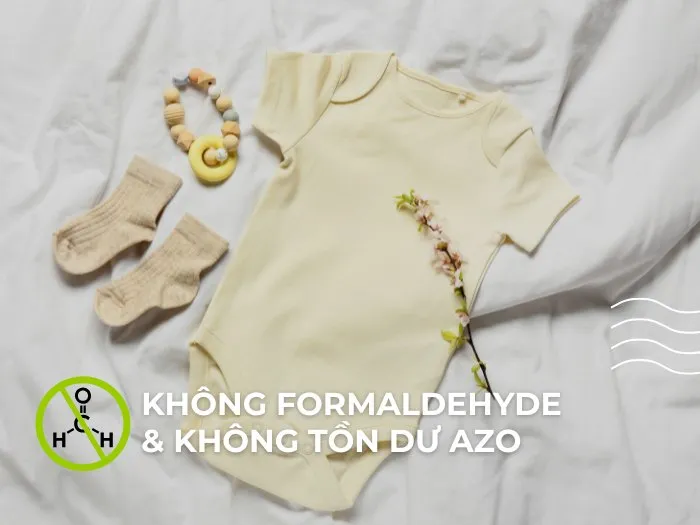
Formaldehyde, commonly used in conventional textiles for wrinkle resistance and color retention, can cause skin, eye, and respiratory irritation. Symptoms may include rashes, itching, watery eyes, and breathing difficulty—effects that appear more strongly in infants due to their underdeveloped skin barrier and immune system.
Similarly, Azo dyes, widely used in industrial dyeing, may break down into aromatic amines, some of which are classified as potentially carcinogenic if retained in textile products.
Under Vietnam Ministry of Industry and Trade Circular 21/2017/TT-BCT, textile products intended for children under 36 months must not contain formaldehyde or Azo dyes above the permitted limit. These criteria are mandatory for selling through retail chains, mother-and-baby stores, or entering strict markets such as the EU and Japan.
Infant skin requires uncompromised safety. Brands should prioritize chemically untreated natural fibers, and ensure products meet trusted international standards such as OEKO-TEX® Standard 100.
4. Anti-static properties for better comfort and more restful sleep
Static electricity can startle a sleeping baby, causing nighttime discomfort and sudden awakenings. Natural fibers such as bamboo and wool have superior moisture-regulation capabilities that help reduce static buildup, providing a calmer, more soothing sleep experience.
5. Enhancing sleep quality with smart fabric construction
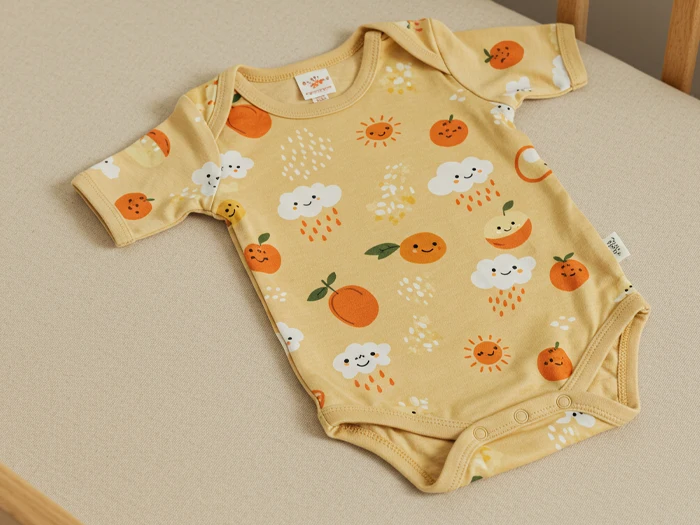
Beyond fiber type, fabric construction also plays a crucial role. Double-layer breathable knits or 3D-structured elastic fabrics (such as SEE4) improve airflow, contour gently to the baby’s body, and reduce heat accumulation.
A growing trend is fiber blends combining bamboo, EcoVero™, and TENCEL™—merging the natural gentleness of each material while increasing durability and optimizing cost. This creates ideal fabrics for baby sleepwear, blankets, and swaddles.

6. Conclusion
As parents increasingly prioritize safety, non-irritating and medically safe textiles have become non-negotiable. Investing in eco-based, dermatologically safe, internationally certified materials not only supports better sleep for babies but also elevates the social value and credibility of mother-and-baby brands.
Understanding the need for specialized infant-grade textiles, W.ELL Fabric proudly provides eco-friendly fabric solutions tested and certified under OEKO-TEX®, GOTS, and verified by trusted laboratories including Intertek, Nissenken, TQC, TRSI, and Bureau Veritas—ensuring absolute safety for newborn and infant skin.
Source of reference:
https://www.researchgate.net
https://teachchemistry.org
https://www-sciencedirect-com
https://pmc-ncbi-nlm-nih-gov


