
News
What Is Interlock Fabric, and How Does It Differ from Single Jersey?

When sourcing fabrics or collaborating with textile mills, distinguishing between single-knit and double-knit structures is standard practice. While single jersey remains a staple for standard t-shirts, understanding the structural properties of interlock fabric allows emerging brands to select the right material and optimize garment silhouettes.
This specific knit structure offers technical advantages across various product categories, from performance activewear and everyday casualwear to home textiles like fitted sheets and mattress covers. Below, W.ELL Fabric breaks down the technical characteristics of this double-knit construction.
1. What Is Interlock Fabric, and How Is It Constructed?
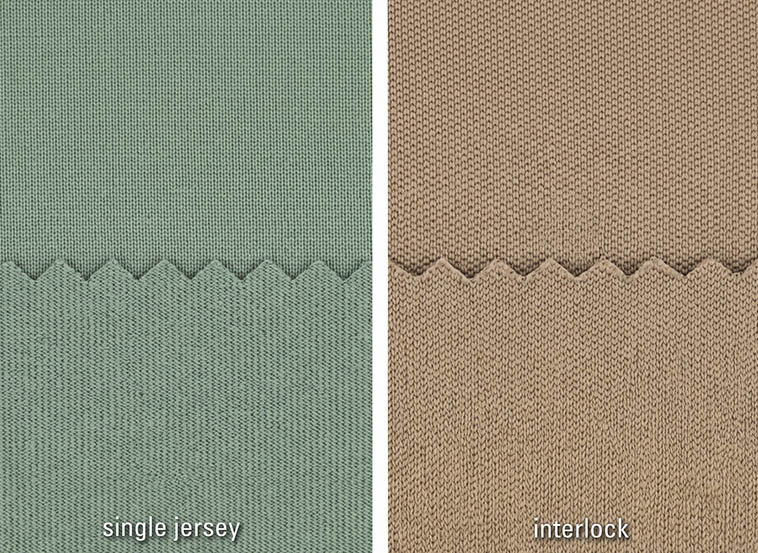
Technically, interlock is a double-knit fabric. Unlike standard single jersey—which is produced on a single needle bed, resulting in distinct face and back loops (V-shaped stitches on the right side and semi-circular loops on the reverse)—interlock requires a knitting machine equipped with two aligned needle beds.

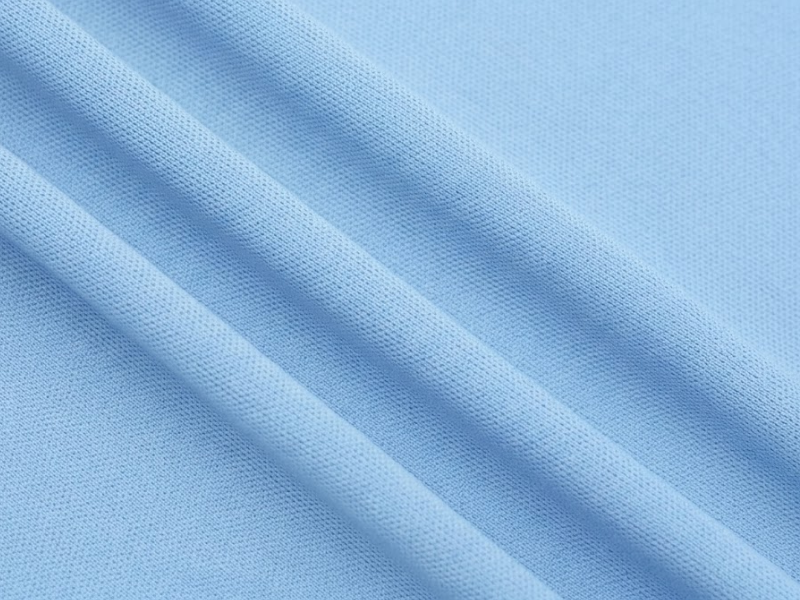
During the knitting process, two rib strands are integrated in a 1:1 ratio. The yarn loops from one needle bed fill the gaps of the opposite needle bed.
This interlocking loop configuration yields identical face and back surfaces. Both sides of the fabric are smooth, uniform, and stable. Due to the double-knit structure, the typical rib texture is replaced by a compact, firm surface with tight, clean knit gaps.
2. Practical Advantages and Disadvantages of Interlock Fabric
Technical Advantages:
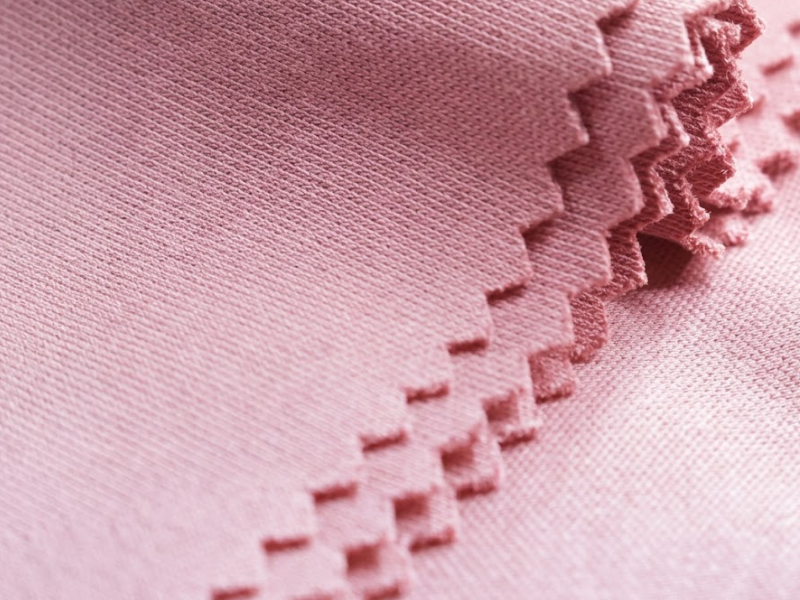
- No Edge Curling: In single jersey fabrics, uneven yarn shrinkage between the face and back loops causes the edges to roll after cutting. Interlock fabric features a symmetrical, balanced structure on both sides, keeping the cut edges flat. This property simplifies fabric spreading, accelerates pattern cutting, and reduces material waste during production.
- Note from W.ELL Fabric’s mill experience: Edge curling in finished fabrics often stems from the finishing stage rather than the initial knit structure. If the stenter heat-setting process is not precisely controlled regarding temperature or mechanical tension, the knitted loops become locked in a distorted state. When the garment factory cuts the fabric rolls, the sudden release of internal yarn stress leads to edge rolling. W.ELL Fabric monitors both knitting density and heat-setting parameters to ensure flat delivery to garment factories.
- Shape Retention: The interlocking double-knit structure provides high mechanical durability. Even under multi-directional tension, interlock fabric exhibits reliable elastic recovery, preventing garment distortion or sagging over time.
- Smooth Surface Texture: The identical smooth finish on both the face and back of the fabric reduces friction against the skin, enhancing overall wear comfort.
Technical Considerations:
High Fabric Weight (High GSM): Due to the double-knit structure consisting of two interlocking yarn systems, interlock fabric is inherently heavier and thicker than single-knit fabrics. When tightly knitted with coarse raw cotton or standard virgin polyester filament, the structure retains more moisture, which increases drying time after laundering.
To address these physical properties, W.ELL Fabric’s R&D process utilizes fiber alternatives that enhance breathability and moisture dispersion:
- Bamboo Interlock (4-Way Stretch): Bamboo fibers naturally possess micro-grooves in their cross-sections, which accelerate capillary action for mechanical moisture wicking. This variant incorporates spandex for 4-way stretch, increasing flexibility and ease of movement.
- Bamboo Cotton Interlock (4-Way Stretch): Blending breathable bamboo fibers with selected cotton reduces overall fabric weight and shortens drying times compared to standard coarse cotton. This 4-way stretch option is designed for activewear or children’s apparel requiring flexible elongation.
3. Diverse Applications: From Apparel to Home Textiles
Activewear & Casualwear
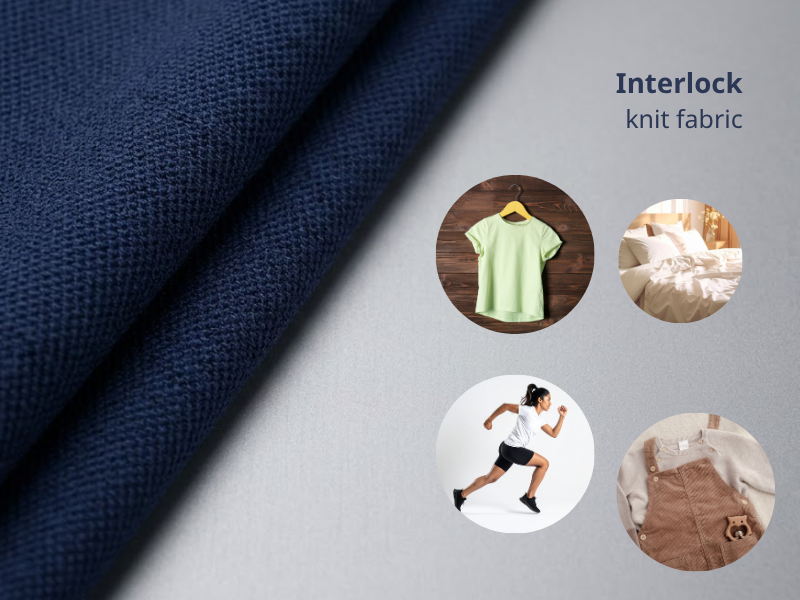
Reliable elastic recovery allows interlock fabric to maintain garment structure across activewear, polos, hoodies, and streetwear. The dense structure ensures opacity, preventing see-through issues during physical movement.
Bedding & Mattress Covers
This construction is widely utilized in the home textiles market. Due to its wrinkle resistance and ability to withstand mechanical tension during mattress stretching, interlock fabric keeps fitted sheets flat and aligned, reducing shifting or pilling over extended use.
Babywear
The smooth finish on both the face and back of interlock construction makes it suitable for infant apparel when knitted with gentle eco-fibers, protecting sensitive skin from rough seam irritation.
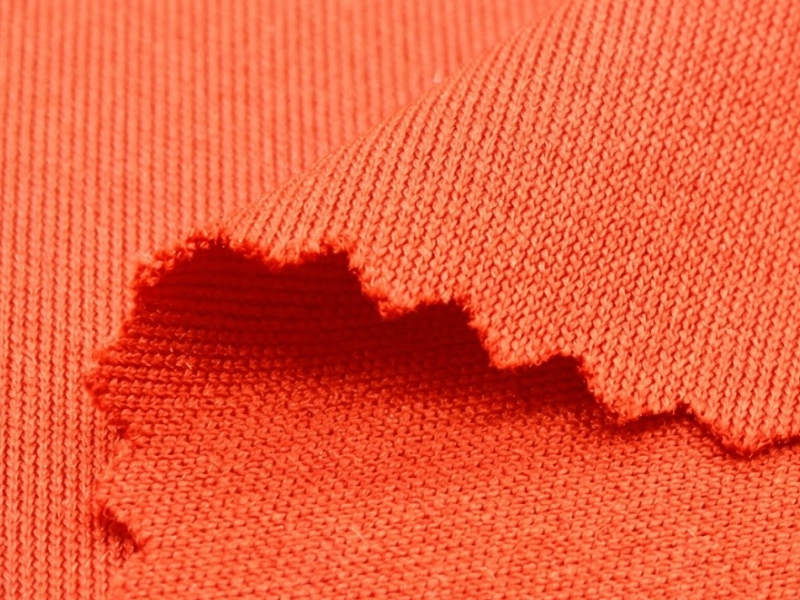
From W.ELL Fabric’s R&D perspective, double-knit structures require specific input material parameters. To minimize pilling and achieve a smooth finish, the spun yarn must be thoroughly cleared of impurities, with a twist coefficient 10% to 20% lower than that of woven yarn. A lower twist maintains yarn bulk, which improves breathability and moisture absorption in an inherently dense double-knit structure.
W.ELL Fabric, an eco-fabric developer under the Bao Lan Textiles ecosystem, updates traditional interlock structures through targeted material engineering:
- Yarn-Level Quality Control: Strict monitoring of yarn cleanliness and twist parameters during the spinning phase ensures a firm, low-pilling fabric surface.
- Eco-Fiber Development: Beyond standard cotton, W.ELL Fabric develops interlock structures utilizing sustainable fibers (such as Bamboo, Ananas, and Cotton+) blended with spandex to enhance performance. These materials meet technical textile standards and comply with origin verification requirements (Vietnam CO), backed by certifications including OEKO-TEX Standard 100, GOTS, and GRS.
- Startup Collaboration Support: W.ELL Fabric provides stable pricing, flexible Minimum Order Quantities (MOQs), and garment manufacturer networking for emerging brands.
Are you sourcing flat, dimensionally stable materials for your next apparel collection or home textile project?
Contact the W.ELL Fabric team to evaluate the right eco-fabrics for your product lines:
- Hotline: (+84) 857 902 535
- Website: wellfabric.com
>>> Discover: 4 Ways to Differentiate Knitted and Woven Fabrics Easily


