
News
What is Rib Knit Fabric? Common Structures and Applications

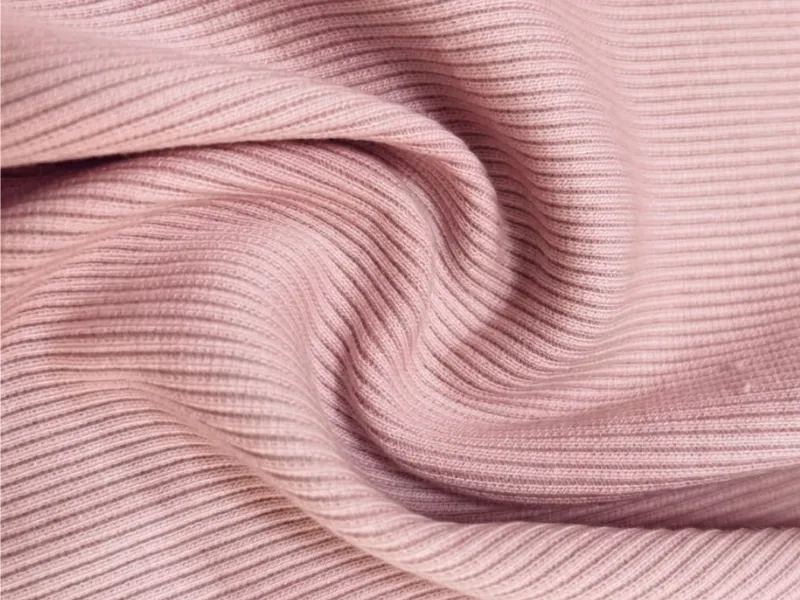
Rib knit fabric (locally known in Vietnam as “vải thun gân” or “borip”) is a specific knit structure featuring alternating raised ribs and recessed grooves running vertically across its surface. This interlaced construction provides the fabric with significant mechanical crosswise elasticity.
In apparel manufacturing, rib knit plays an essential role in constructing trims (such as collars and cuffs) and serves as the standard material solution for form-fitting designs without distorting the garment’s original pattern.
1. What is Rib Knit Fabric?
Within knit structure classifications, rib knit is one of the most highly applicable material formats. In the Vietnamese market, this material is commonly referred to by popular names such as “thun gân” or “vải borip” (a localized adaptation of the international term). In standard textile technical documentation, this structure is officially designated as Ribbed fabric or Rib knit.

Regarding the knitting principle, unlike Single Jersey fabric (which utilizes a single needle bed to create distinct face and back sides), Rib fabric requires a double-bed knitting machine system operating synchronously. The knitting process occurs by alternating face loops (knit stitches) and back loops (purl stitches) across the same course.
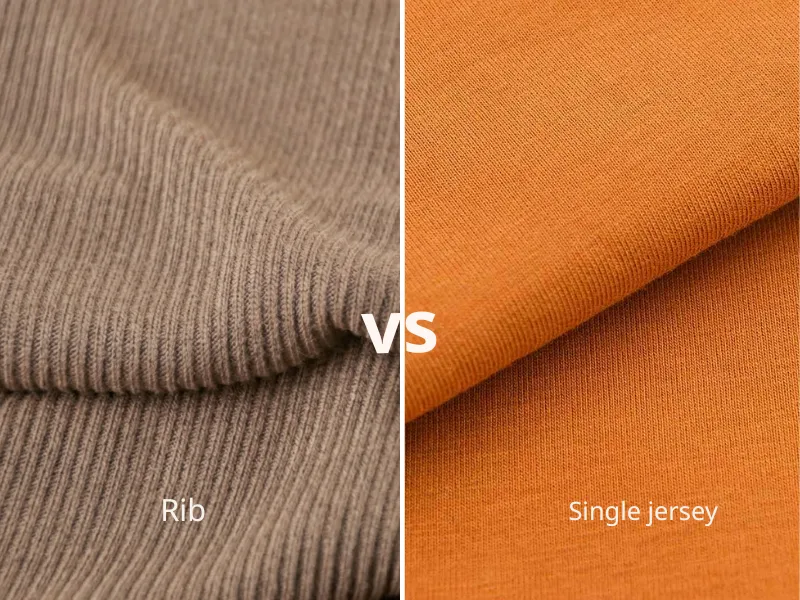
This calculated alternation creates the characteristic visual effect: the fabric surface displays raised vertical columns (ribs) alternating with recessed grooves running along the length of the fabric roll. This symmetrical loop construction not only forms the fabric’s identifying feature but also directly dictates the mechanical stretch specifications of the finished product.
2. Common Rib Knit Structures
Depending on the needle setup ratio used to create alternating face loops (knit) and back loops (purl), rib knit structures are categorized into various types. Variations in this stitch ratio directly determine the fabric weight (GSM), crosswise stretch, and surface appearance.
From a knitting engineering perspective, there are two standard rib structures most commonly utilized:
1×1 Rib (Normal and Loose) This structure features a 1:1 ratio of alternating knit and purl stitch columns. Depending on the yarn tension applied during knitting, 1×1 rib is further divided into two variations:
- 1×1 Rib Normal (Standard Tension): The knitting machine maintains consistent yarn tension. The fabric surface features small, well-defined ribs with moderate mechanical stretch. This is a standard choice for basic t-shirt bodies, polo collars, or lightweight cuffs.
- 1×1 Rib Loose (Low Tension): Maintaining the 1:1 needle ratio, the machine is set to a lower yarn tension. This results in a softer hand-feel, less defined ribs, and significantly reduced tightness. This variation is ideal for casualwear or relaxed-fit patterns that do not require high compression.

2×2 Rib This structure is created by alternating 2 knit columns and 2 purl columns. The physical characteristics of the 2×2 rib include wider, more pronounced ribs and a generally heavier GSM compared to 1×1 rib. The mechanical stretch and crosswise recovery of 2×2 rib are highly effective. Therefore, this structure is the technical standard for components requiring high shape retention, such as bottom hems, jacket collars, and sweater cuffs, ensuring the garment snaps back to its original shape after stretching.
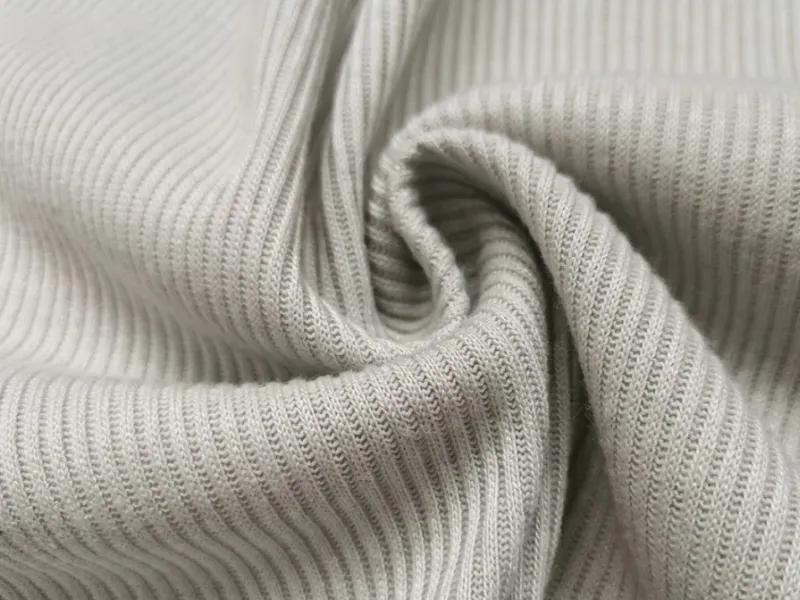
Commercial Market Variations In addition to technical needle classifications, the textile market utilizes various commercial terms based on surface appearance and rib width. Specifically:
- Baby Rib (or Micro Rib): Refers to rib knits with extremely fine and narrow raised ribs
- Wide Rib (or Jumbo Rib): Refers to fabrics with thick, highly pronounced ribs (typically 2×2 or 3×3 structures).
- Cool-touch Rib: A commercial term for rib knits blended with a high percentage of synthetic fibers (Polyester/Nylon), combined with specific finishing treatments to create a smooth, drapable surface that provides a cooling sensation upon contact.
3. Evaluation of Physical Properties of Rib Knit Fabric
3.1. Key Advantages
- High crosswise stretch and shape recovery: The symmetrical loop construction of alternating knit and purl stitches creates significantly higher mechanical crosswise elasticity compared to Single Jersey. When blended with Spandex, the fabric’s ability to recover to its original state after stretching is consistently maintained, allowing garments to conform closely to the body without distorting the pattern specifications after multiple wear cycles.
- Breathable and porous structure: The alternation between raised ribs and recessed grooves creates a system of micro-gaps on the surface. This construction minimizes the direct contact area between the fabric and the skin, facilitating natural heat dissipation and airflow.
- Flat edges and wrinkle resistance: Unlike Single Jersey, which tends to experience edge curling after cutting, rib knit achieves a balanced tension between the face and back. As a result, the fabric edges remain flat, supporting precise spreading and cutting operations. Additionally, its natural elasticity restricts the formation of flat wrinkles after washing.
3.2. Physical Limitations and Solutions
- High fabric weight (GSM): Because it is produced on a double-bed knitting machine with a dense loop structure, rib fabric is generally heavier than plain knits (average weight ranges from 220 gsm to over 400 gsm). To address this issue for summer apparel, R&D processes typically adjust to finer yarn counts or switch to a loose knit configuration (Loose Rib) to reduce the overall fabric weight.
- Slow drying time and pilling risk in coarse cotton: Rib knits made from 100% low-twist cotton tend to retain a significant amount of water within their thick rib structures, prolonging the drying time. Furthermore, mechanical friction during wear easily causes the free fiber ends of coarse cotton to protrude to the surface, resulting in pilling. To overcome this limitation, W.ELL Fabric has developed rib fabrics blended with bamboo fibers (such as Bamboo/Cotton or Bamboo/Spandex). The natural micro-groove cross-section of bamboo fibers accelerates mechanical moisture wicking, yielding a fabric that is lightweight, porous, quick-drying, and capable of maintaining a smoother surface over time.
4. Practical Applications in Apparel Design
Thanks to its excellent shape recovery and mechanical crosswise elasticity, the rib knit structure effectively serves two primary application categories: technical trims and main body fabrics.
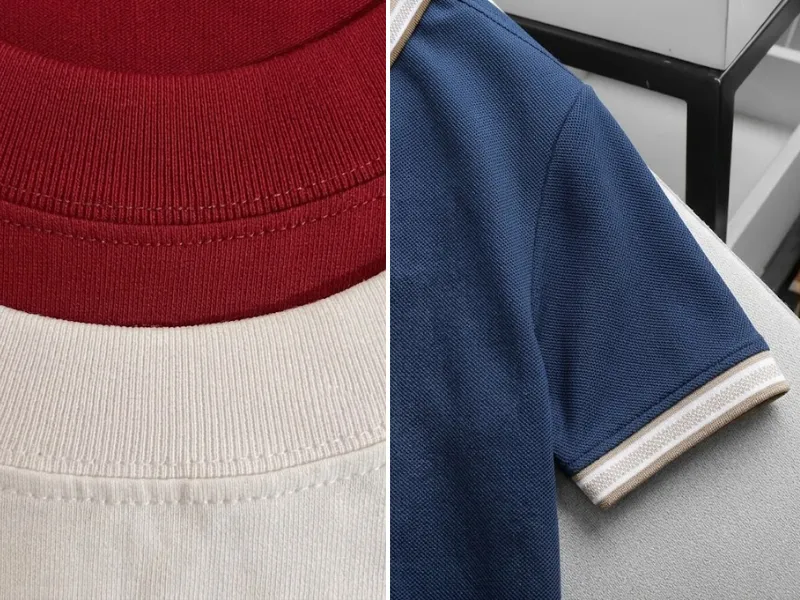
Technical Trims: The rib structure (particularly 1×1 and 2×2 rib) is the industry standard for constructing neckbands, jacket cuffs, and bottom hems. Its high mechanical contraction allows these finishing details to snugly fit the wrists, neck, and waist, reducing drafts and aiding in body heat retention without sagging or stretching out after multiple wash-and-wear cycles.
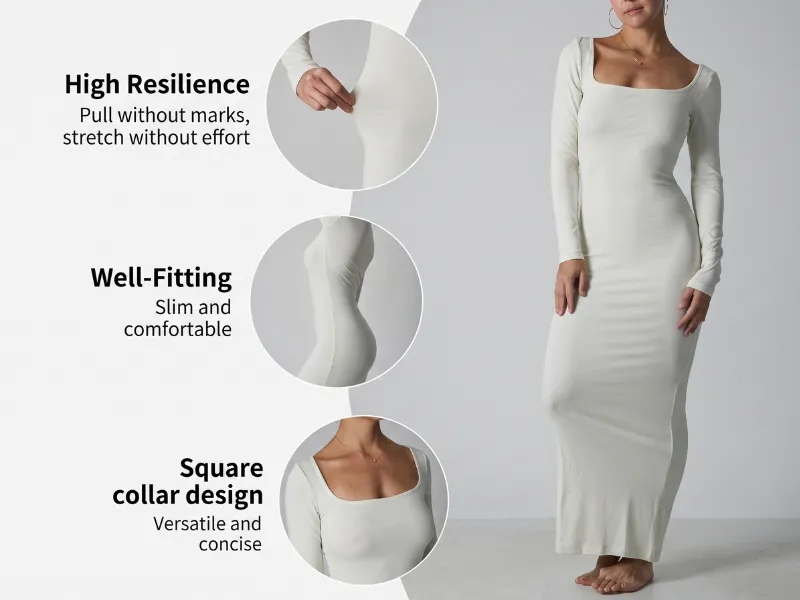
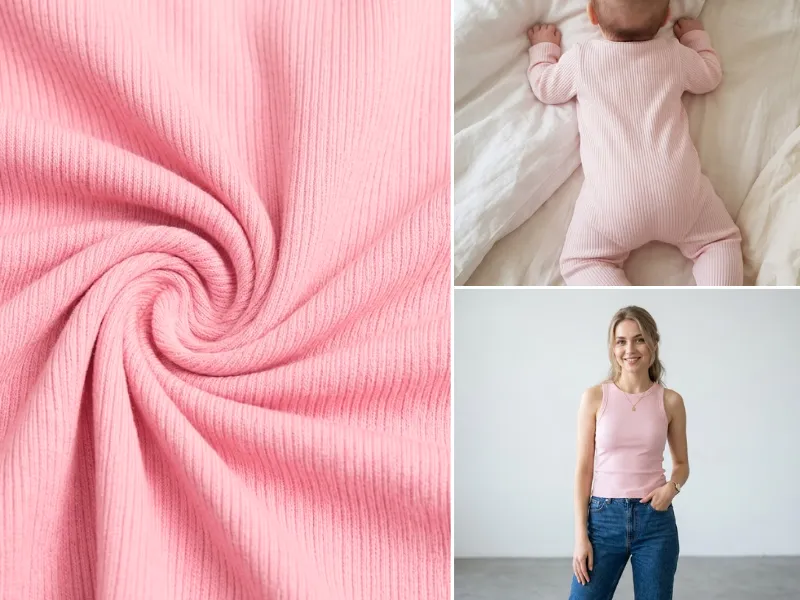
Base Fabric for Form-Fitting Apparel: For designs that require contouring to the body, such as bodycon dresses, tank tops, or intimates, rib knits provide flexible stretch that moves with the wearer. This crosswise elasticity allows the finished garment to dynamically adjust to the wearer’s dimensions while maintaining the silhouette dictated by the original pattern.
Loungewear and Babywear (Infant Apparel): The alternating raised and recessed texture creates a porous, breathable surface, minimizing the direct contact area and preventing the fabric from clinging to sweaty skin. When knitted from soft fibers such as cotton or bamboo, rib fabric achieves an exceptionally soft hand-feel, making it highly suitable for everyday loungewear and newborn items.
5. R&D Solutions from W.ELL Fabric: Eco-Fiber Rib Knits
Typically, commercial rib knits made from polyester are prone to static buildup, while heavyweight coarse cotton rib knits tend to retain moisture and have slow drying times.
To address this technical challenge, W.ELL Fabric’s R&D process focuses on developing rib knits that blend cotton with bamboo fibers and Spandex. The micro-grooved cross-section of bamboo fibers creates a more porous rib structure, significantly accelerating mechanical moisture wicking.
Below are the product specifications currently offered by W.ELL Fabric (test samples are available for garment factories and brands):
Bamboo Rib Knit (Excellent drape, soft hand-feel, quick moisture wicking)
- 100% Bamboo Rib: Width: 180 cm | Weight: 230 gsm. A pure eco-fiber composition, highly skin-friendly.
- 87% Bamboo – 13% Spandex Rib: A high-stretch fabric driven by a high Spandex content. Available color code: Marry Rose (12-1813TCX).
Bamboo/Cotton Blend Rib Knit (Balanced shape retention and soft porosity)
- Bamboo/Cotton Rib: Heavyweight: 402 gsm. Suitable for winter apparel and heavy jacket neckbands.
- 94% Bamboo/Cotton – 6% Spandex [1×1 Rib]: Weight: 250 gsm. A standard 1×1 rib structure with excellent shape recovery.
100% Cotton Rib Knit
- 100% Cotton Rib: Cotton fiber structure providing good moisture retention and firm structural definition. Available color code: Beige (14-1315 TCX). Weight: 290 gsm.
Rib knits play an essential role in defining form-fitting silhouettes and executing technical trims in apparel manufacturing. The precise calculation of yarn counts, bamboo/cotton/spandex blend ratios, and knit structures (1×1, 2×2 rib) dictates the fabric’s mechanical durability and actual wearer experience.
To physically evaluate GSM specifications, crosswise stretch, and surface hand-feel, garment factories and apparel brands can contact W.ELL Fabric’s R&D team to request physical fabric swatchbooks or hangers:
- Hotline: (+84) 857 902 535
- Website: wellfabric.com
- Email: hello@wellfabric.com
>>> Discover more: What Is Interlock Fabric, and How Does It Differ from Single Jersey?


