
News
4 Ways to Differentiate Knitted and Woven Fabrics Easily

What sets knitted and woven fabrics apart? Which one is the perfect match for your brand’s design aesthetic? If you are looking for the right material solution, this article is for you. Join W.ELL Fabric as we break down the technical properties and practical applications of each fabric type to help you optimize your product quality from the very first step.
1. How do Knitted and Woven fabrics differ?
Knitted fabrics are formed by interlocking loops of yarn in a structured, sequential pattern. This construction functions as a flexible network, allowing for natural, multi-directional stretch that provides maximum comfort for the wearer. However, because of this inherent elasticity, knitted fabrics require precise knitting techniques and specialized yarn treatments to prevent sagging or losing shape over time.

Woven fabrics are created by interlacing two sets of yarns—the warp and the weft—at right angles on a loom. This calculated arrangement results in a durable, sturdy structure with excellent dimensional stability. Woven construction is the technical foundation for apparel that demands a crisp, structured silhouette and long-lasting shape retention.
Quick Comparison Table:
| Criteria | Knitted Fabric | Woven Fabric |
| Elasticity | Naturally flexible & stretchy | Low stretch (unless blended with Spandex) |
| Durability | Depends on loop tightness | High durability & strength |
| Applications | T-shirts, Polos, Activewear, Loungewear | Dress shirts, Blazers, Trousers, Premium apparel |
| Surface Finish | Soft, absorbent, textured | Smooth, crisp, structured |
| Care & Maintenance | Wrinkle-resistant, machine washable | Prone to wrinkling, requires ironing to maintain form |
2. How to Distinguish Between Knitted and Woven Fabrics: A Quick & Accurate Guide
2.1. Texture Observation
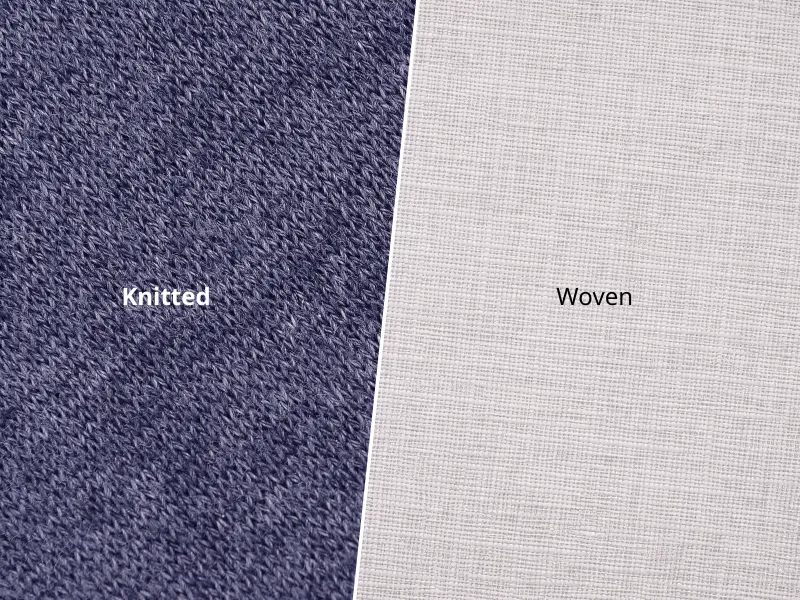
This is the most intuitive method.
- Woven Fabric: Imagine the structure of a grid. You will see warp and weft yarns interlaced at right angles, creating a dense and sturdy surface. Woven fabrics typically offer a crisp, stable silhouette.
- Knitted Fabric: Upon close inspection, you will notice the fabric is formed by interlocking loops of yarn, much like a flexible network. With weft knits, you can easily identify the familiar “V” shaped stitches characteristic of standard T-shirts.
2.2. Stretch Test

If the fabric surface has been finished in a way that makes it difficult to see the texture, use a simple stretch test.
- Woven Fabric: When pulled, the fabric typically shows little to no stretch (unless blended with elastomeric fibers like Spandex). If you pull strongly at the edge, the yarn structure tends to shift or fray because the fibers are not locked in loops.
- Knitted Fabric: This fabric “breathes” thanks to the natural elasticity of its loops. Try stretching it horizontally or vertically, and you will see the fabric quickly recover to its original state. This is key to the ultimate comfort found in sportswear and casual apparel.
2.3. Selvage Inspection

The selvage is the “fingerprint” of the weaving/knitting technique.
- Knitted Fabric: Often sold in rolls or specific widths, the edges are usually treated with sizing to prevent curling—a natural tendency of loop-based structures when cut.
- Woven Fabric: The selvage is typically soft, sturdy, and does not curl like knitwear. If you try to pull a yarn from the edge, it will come out as a distinct, single thread. Conversely, if you pull a thread from a knit fabric, the entire structure will easily unravel in a chain reaction.
2.4. Evaluating Wrinkle Resistance
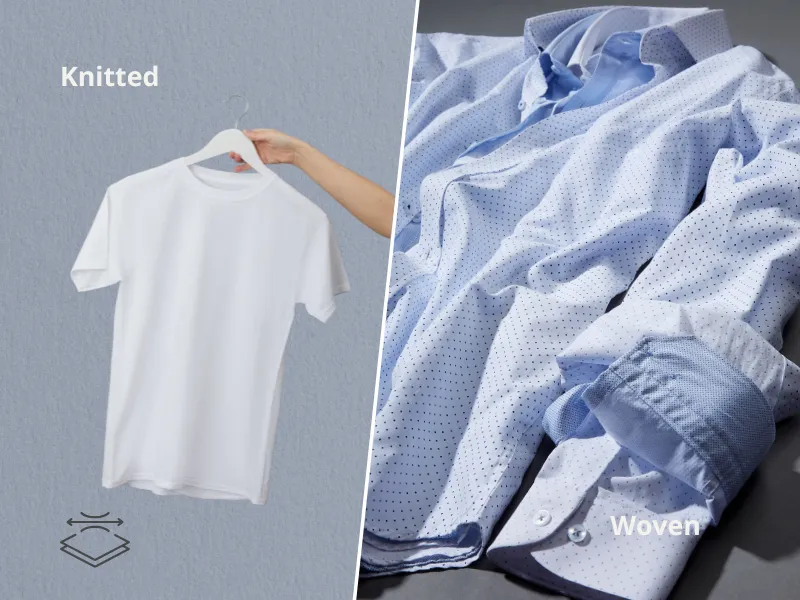
Wrinkle resistance is not just an aesthetic issue; it reflects the structural nature of the fabric and its long-term care requirements.
How to do it: Grasp a small handful of fabric in your palm, squeeze gently for 5–10 seconds, then release.
Results:
- Knitted Fabric: Thanks to the high elasticity of its loop structure, knitwear usually recovers exceptionally well. When you release your hand, wrinkles disappear quickly, and the fabric surface returns to its original flat state. This is why T-shirts and sportswear are often low-maintenance and rarely require heavy ironing.
- Woven Fabric: Because warp and weft yarns are tightly interlaced at right angles, this structure tends to hold “creases” after being crushed. You will notice prominent wrinkle lines, and the fabric takes longer to flatten out on its own. Woven fabrics, especially natural fibers like Linen or Cotton, often require more meticulous care to maintain their crisp appearance.
3. Strategic Selection: Optimizing Your Design Choices
Choosing between knitted and woven fabrics should not be based on intuition alone; it requires a business-driven approach that aligns with your brand’s market positioning.
When to Choose Knitted Fabric?
This is the ideal choice for product lines that prioritize flexibility and user experience, such as loungewear, streetwear, or activewear.
- Key Benefits: Superior comfort, excellent moisture absorption, and multi-directional stretch, which helps minimize sizing errors for online shoppers.
- Expert Insight: For startups, brand reputation is built on product durability. Prioritize fabrics treated with Compact or Siro Compact spinning technology. This technique results in a smoother yarn surface, significantly reducing pilling after repeated washes and helping your products maintain their “like-new” appearance longer.
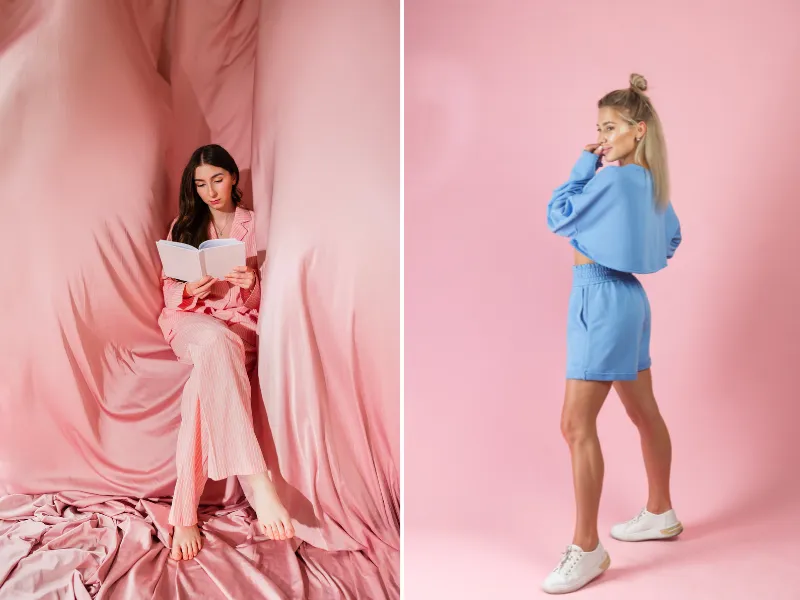

When to Choose Woven Fabric?
This is the perfect foundation for designs that require a polished, crisp aesthetic, such as smart casual or office wear.
- Key Benefits: Excellent structural stability, which ensures professional-looking lookbooks, flatters the wearer’s silhouette, and gives the garment a premium feel.
- Pro Tip: The primary drawback of traditional woven fabric is its stiffness. The secret to overcoming this is to select fabrics made from natural fibers like Pineapple (Ananas) or Bamboo. Not only do these fibers offer a natural, luxurious softness and improved breathability compared to polyester blends, but they are also exceptionally gentle on sensitive skin.

Choosing between knit and woven fabrics goes beyond just selecting a material; it is about finding the fabric that truly aligns with your brand’s “personality” and strategic direction.
W.ELL Fabric does more than just supply fabric—we offer comprehensive R&D solutions that help your brand optimize production processes and establish a reputation for credible, eco-conscious excellence:
- Quality from the Fiber Source: By maintaining strict control over yarn twist and purity right from the spinning stage, W.ELL Fabric ensures an exceptionally stable foundation for every fabric. We are committed to high-standard quality using genuinely natural, gentle, and durable materials.
- Technical Optimization & Diverse Weaves: Our expert technical team provides in-depth consulting on weaving structures to ensure high durability, minimal shrinkage, and long-lasting shape retention. Our diverse range of weaves and compositions offers the creative flexibility to meet the most rigorous technical and aesthetic requirements.
- Pioneering Eco-Solutions: We provide an extensive portfolio of sustainable materials (including Bamboo, Ananas, and Cotton+) with full transparency of origin and verifiable Vietnamese COs. This is a key advantage that helps your brand leverage tax incentives, boost international credibility, and make a lasting impact in the sustainable fashion segment.
- Competitive Pricing & Reliability: W.ELL Fabric offers stable pricing, flexible order quantities, and a commitment to on-time delivery—providing the optimal operational and cost-efficiency solution for startup brands.
Are you planning your next sustainable collection? Don’t let technical barriers hinder your creative vision. Contact the W.ELL Fabric team today to receive expert consultation:
- Hotline: (+84) 857 902 535
- Website: wellfabric.com
>>> Read more: Polyester Fabric vs Cotton: Differences and 3 Ways to Distinguish


