
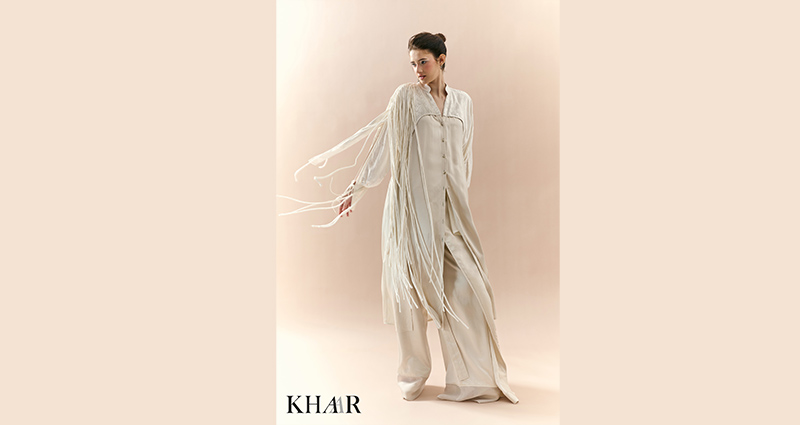
In early 2026, Elle Singapore featured the “RICE/Rise: From Fields to Pixels” collection, which made a significant impact at the Singapore Stories Fashion Show. This innovative collection was envisioned by Vietnamese designer Ngo Hoang Kha, the creative force behind the fashion house KHAAR.
A standout moment of the event featured Mohana Prabha (Miss Universe Singapore 2019) gracing the runway in a masterpiece crafted from Bamboo Lãnh. This exclusive fabric, a sophisticated blend of eco-friendly Bamboo Biocell fibers and premium Vietnamese silk, was meticulously researched and developed by W.ELL Fabric.
The material’s unique heritage and sustainable luxury caught the attention of Elle Singapore, leading to its inclusion in the featured article: “KHAAR Breathes New Life Into Discarded Textiles.”
Explore the translated highlights of the article below.
1. Reimagining Indigenous Heritage Through a Contemporary Lens
The collection “RICE/Rise: From Fields to Pixels” positions Vietnamese cultural heritage at the epicenter of designer Ngo Hoang Kha’s creative vision. The recurring motifs draw deep inspiration from the Vietnamese countryside—from the symbolic water buffalo to mist-shrouded rice paddies.
“It is a dialogue between the past and the future; a bridge between the roots of an agrarian civilization steeped in traditional wet-rice cultivation and the pulse of a dynamic digital generation,” Kha explains. This synergy defines his “Neo-Folklore” aesthetic, where heritage and technology coalesce into a new artistic dialect. Kha’s design process typically commences with a deep exploration of color—an approach that birthed KHAAR’s signature visual language: Digital Pixelation. “When I deconstruct textile offcuts into their most elemental units—threads, dots, and fragments—they mirror the pixels of a digital image.”
Approximately half of KHAAR’s silhouettes are handcrafted entirely from upcycled remnants. The remaining pieces are composed of natural, biodegradable textiles such as linen, hemp, silk, organic cotton, cupro, lyocell, and EcoVero rayon. Most notably, the collection features Bamboo Lãnh—the pioneering eco-friendly bamboo silk produced in Vietnam by W.ELL Fabric.
“These materials do more than just align with our core sustainability values; they provide a sense of refined luxury and exceptional comfort,” the designer elaborates.
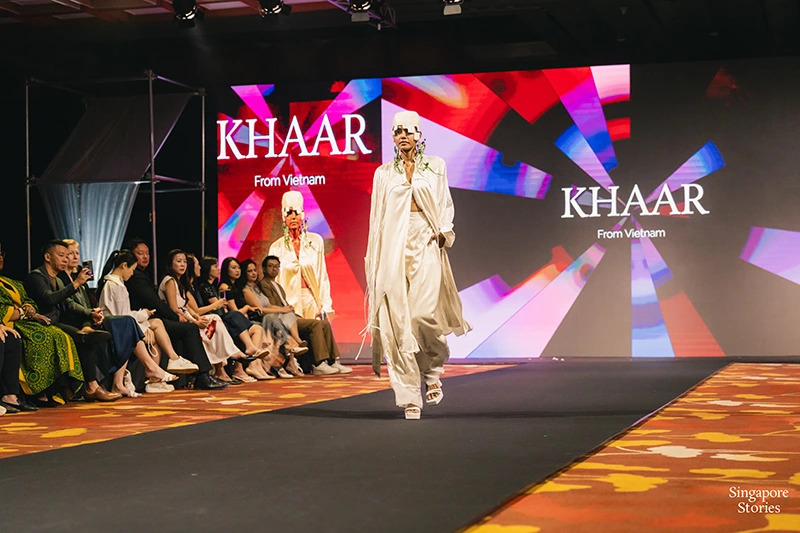
2. Bamboo Lãnh: A Pioneering Textile Innovation from Vietnam
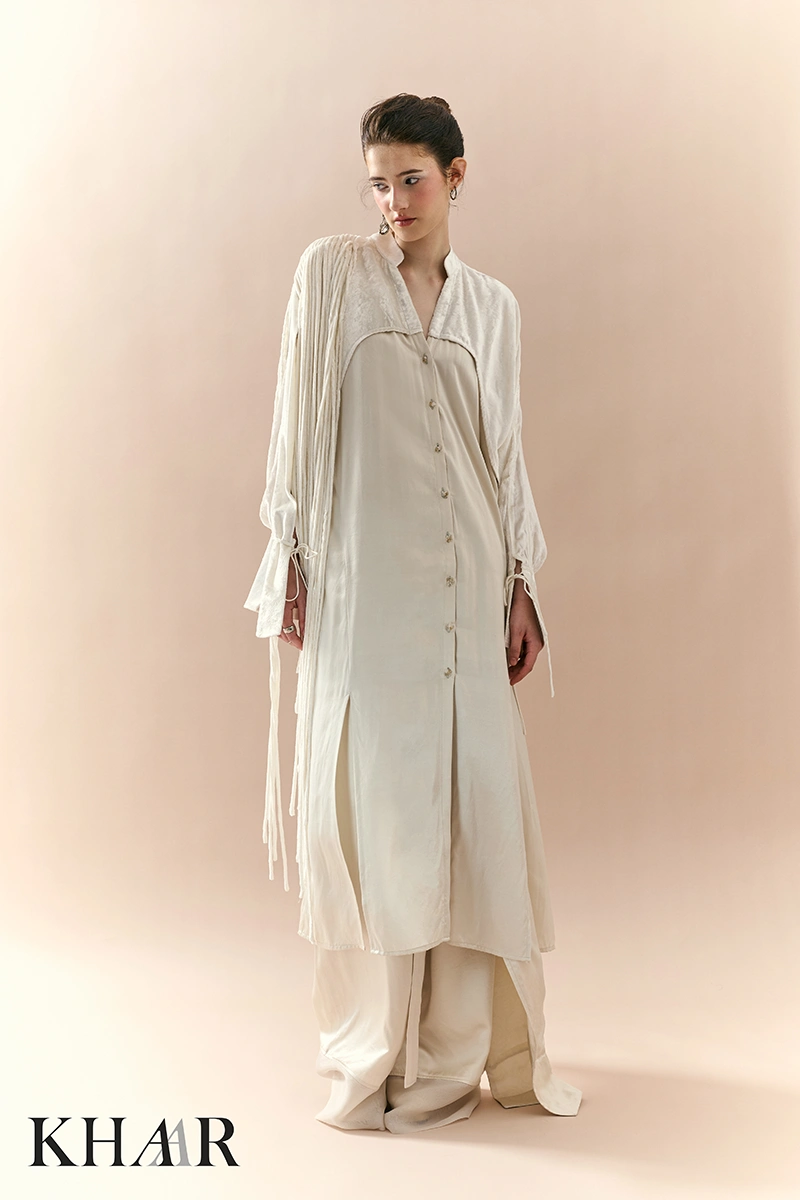
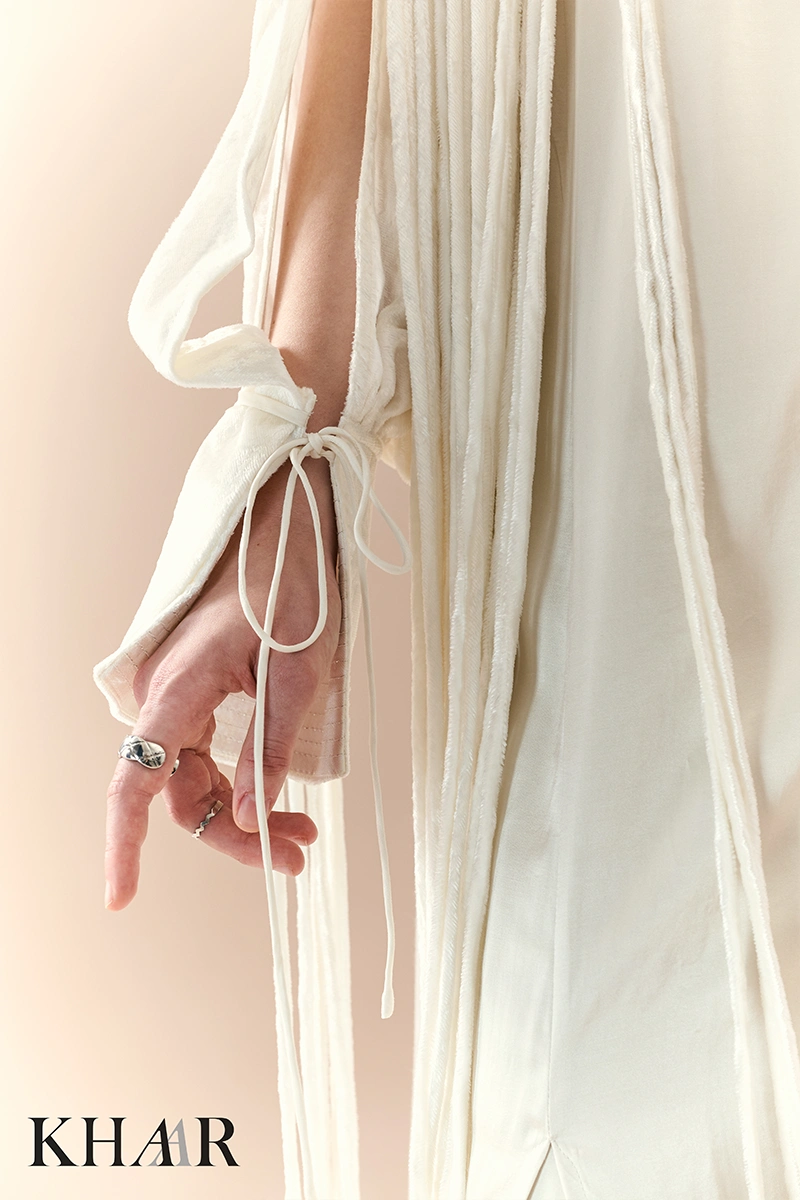
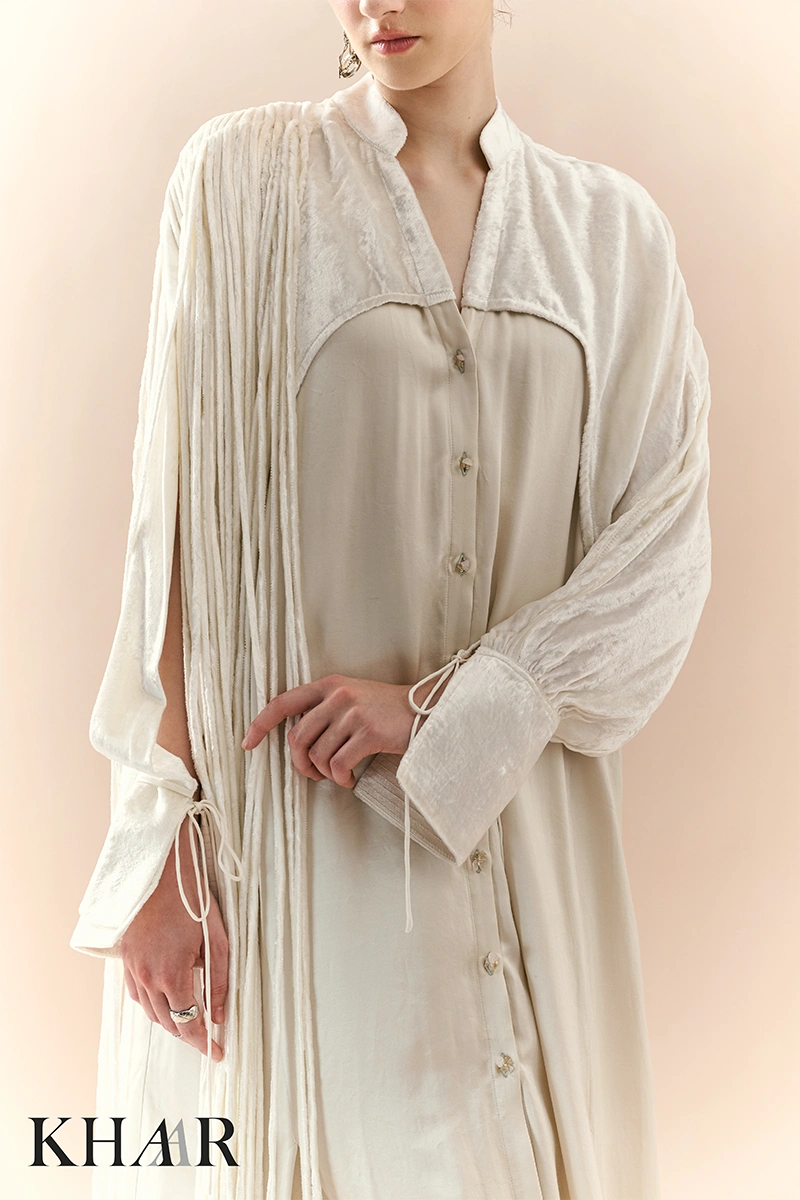
A centerpiece of the collection features Bamboo Lãnh—the world’s first eco-friendly bamboo silk, meticulously developed by W.ELL Fabric in Vietnam. The silhouette draws inspiration from the traditional Áo Tứ Thân (four-part dress), reimagined through a contemporary pairing with wide-leg trousers and intricate layering.
“The soft white tones transition into a misty blue-grey, evoking the ethereal fog that blankets rice paddies at dawn,” Ngo Hoang Kha explains. “The asymmetrical fringe cascading from one shoulder symbolizes bundles of harvested rice—a poetic tribute to labor, memory, craftsmanship, and perseverance.”
>>> Read more:
- 5 Reasons Why Bamboo Biocell Fabric Is Eco-Friendly, Safe & Versatile
- French Brand Develops Scarves From Bamboo Biocell Fabric Made in Vietnam
3. Tech-Enabled Solutions for Sustainable Design
Technology remains a cornerstone of the brand’s philosophy. “The majority of KHAAR’s designs are developed using 3D patternmaking and virtual prototyping. This allows me to optimize time and resources while significantly reducing textile waste during the production process,” Kha explains.
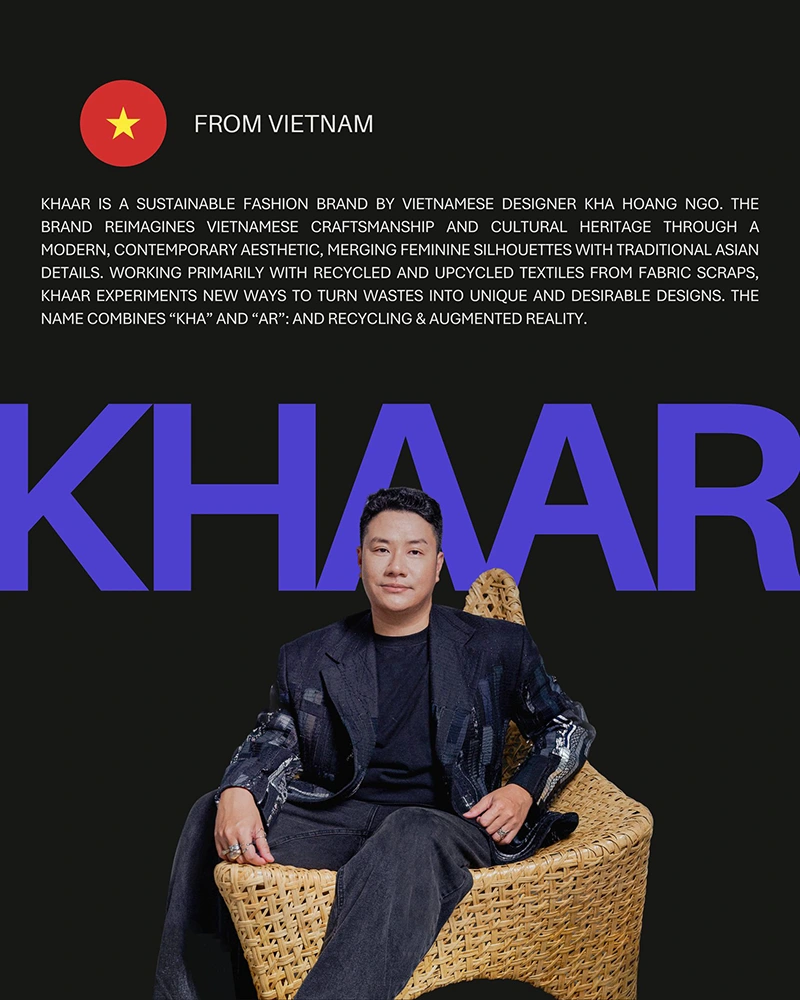
Ngo Hoang Kha’s commitment to sustainability was forged early in his career. In 2020, he designed his first sustainable collection for a fashion competition using textile offcuts, leading to the founding of KHAAR in 2022. “The name is a fusion of ‘Kha’ and AR—representing ‘And Recycling’ and ‘Augmented Reality’. It reflects our belief in merging sustainability, technology, and forward-thinking creativity,” he elaborates.
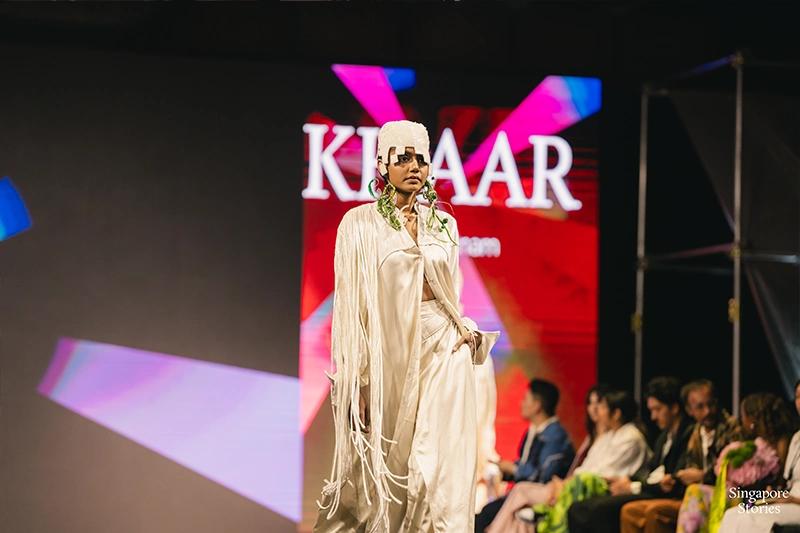
Through the “RICE/Rise: From Fields to Pixels” collection, W.ELL Fabric takes pride in seeing Bamboo Lãnh transcend its role as a mere textile. It has become an artistic medium, empowering designers to narrate the story of Vietnamese culture to a global audience.
>>> See more:
- ANANAS Yarn Goes EU in Medical Applications
- Exploring Future-Forward Materials at NEXT@Fashion InStyle 2025
- ANANAS Fabric Was Introduced In Paris


