
Ananas
Comparing Ananas yarn (Pineapple) and Linen yarn Through LCA

Ananas fibre and flax fibre are two plant-based materials increasingly used in the textile and fashion industry as alternatives to conventional fibres. As interest in renewable and biodegradable materials continues to grow, understanding their environmental performance has become increasingly important.
Based on a Life Cycle Assessment (LCA) conducted using the European Commission’s Environmental Footprint (EF) 3.1 Life Cycle Impact Assessment (LCIA) methodology, this article examines and compares the environmental impacts associated with the production of pineapple fibre and flax fibre.
The assessment focuses on the cradle-to-gate stage, covering activities from raw material cultivation and collection through to the production of carded fibre suitable for spinning. By evaluating resource consumption, emissions, and environmental impacts across the production chain, the analysis provides a benchmark comparison of the two fibres under the assessed conditions.
The findings offer insights into the environmental footprint of both materials and contribute to a broader understanding of their potential role in the transition towards more sustainable textile value chains.
1. What is the LCA methodology? What is the assessment scope for Ananas Fibre?
The LCA (Life Cycle Assessment) report, conducted in accordance with ISO 14040 and ISO 14044 standards, provides a comprehensive evaluation of the environmental impacts associated with fibre production. Specifically, LCA measures resource consumption, emissions, and environmental impacts throughout the production system, focusing on the cradle-to-gate stage, from cultivation to the production of 1 kg of raw fibre ready for spinning.
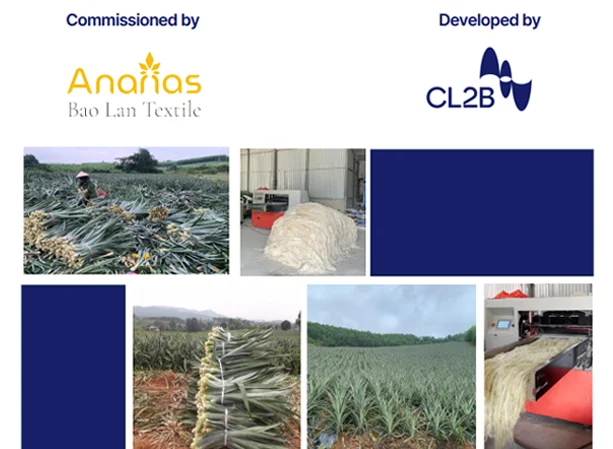
The life cycle assessment results for pineapple fibre provide detailed information that helps pineapple fibre producers understand their current environmental footprint, identify opportunities for improvement, and benchmark their production process against linen fibre production to evaluate competitiveness and sustainability potential.
In addition, the report serves as a reliable reference for apparel and fashion brands to compare the environmental and sustainability potential of different materials, as well as assess the competitiveness of the fibres they choose to use.
The assessment scope of the LCA report covers the entire pineapple leaf fibre (PALF) production system, including all stages from leaf collection—an agricultural by-product of pineapple cultivation—to the production of fibre ready for spinning. The process begins at the farm level, where the leaves are retted, decorticated, and sun-dried to produce raw fibre. The raw fibre is then carded, cut, and further refined at another facility to produce fibre suitable for spinning.
This assessment scope is compared with a cradle-to-gate system for linen fibre, covering flax cultivation and processing into fibre ready for spinning (using field and fibre production data from the Ecoinvent v3.11 database, which is based on Indian production conditions).
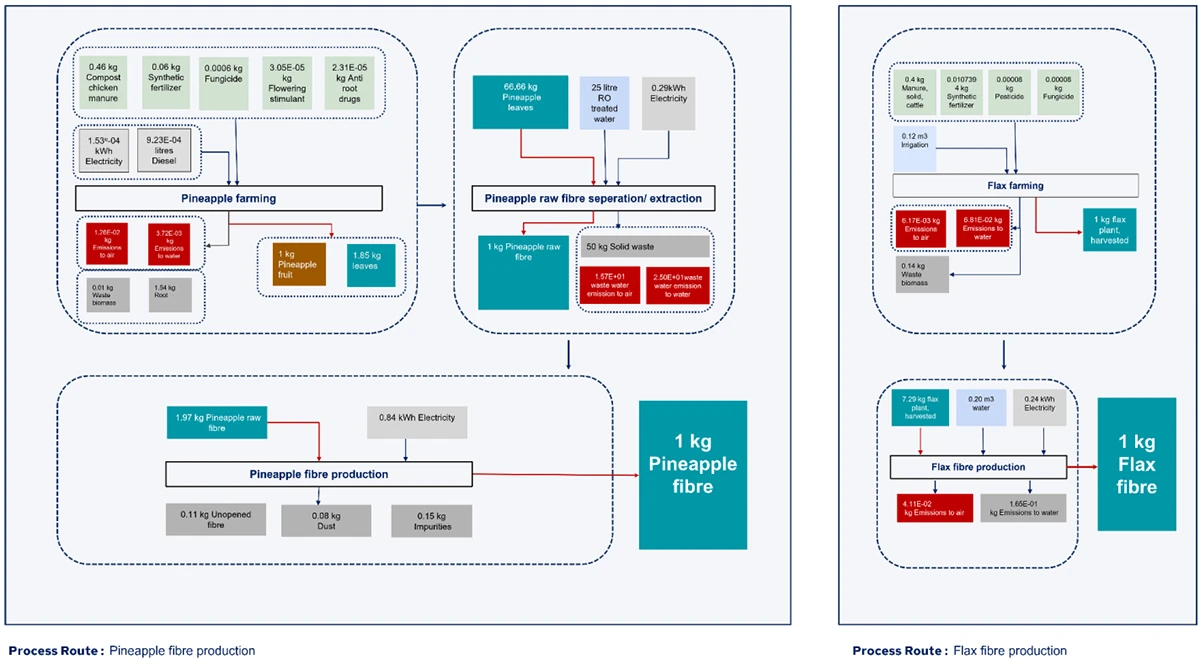
2. Why Does Ananas have environmental advantages over Flax?
Based on the LCA results, the key differences between the two fibers stem from their raw material sources, cultivation systems, and the amount of energy required to convert them into spinnable fiber. The following factors explain the environmental advantages of Ananas fiber compared to flax.
2.1. Raw material source and environmental impact allocation
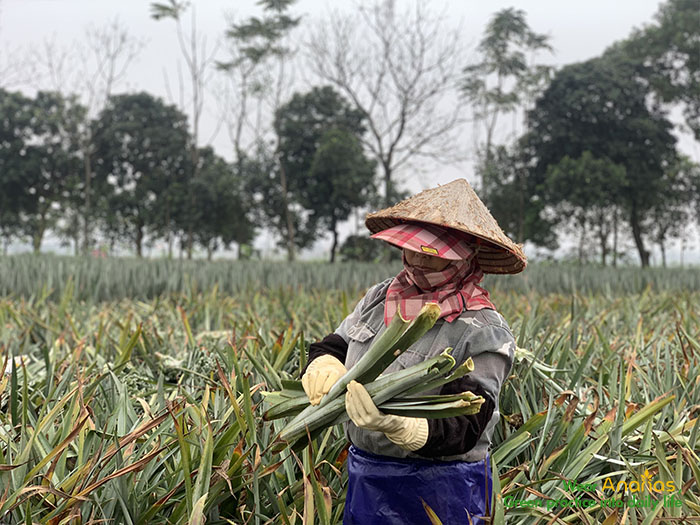
Ananas fiber is derived from agricultural by-products
- Pineapple leaves are not the primary product of pineapple farming. When utilized for fiber extraction, they inherit only a very small portion of the environmental impacts associated with pineapple cultivation.
- The low economic value of pineapple leaves results in a minimal allocation of environmental burdens.
- Utilizing this agricultural by-product also helps reduce the amount of biomass discarded at the farm level.
Flax (linen) – a dedicated fiber crop
- Flax is cultivated primarily for fiber production.
- As a result, all environmental impacts related to fertilizers, irrigation, land use, and farming activities are fully allocated to flax fiber.
- This gives flax a larger environmental footprint from the very beginning of the production chain.

2.2. Differences in agricultural practices and resource inputs
Pineapple – a low-input agricultural system
- Pineapple cultivation relies entirely on natural rainfall and does not require industrial irrigation systems.
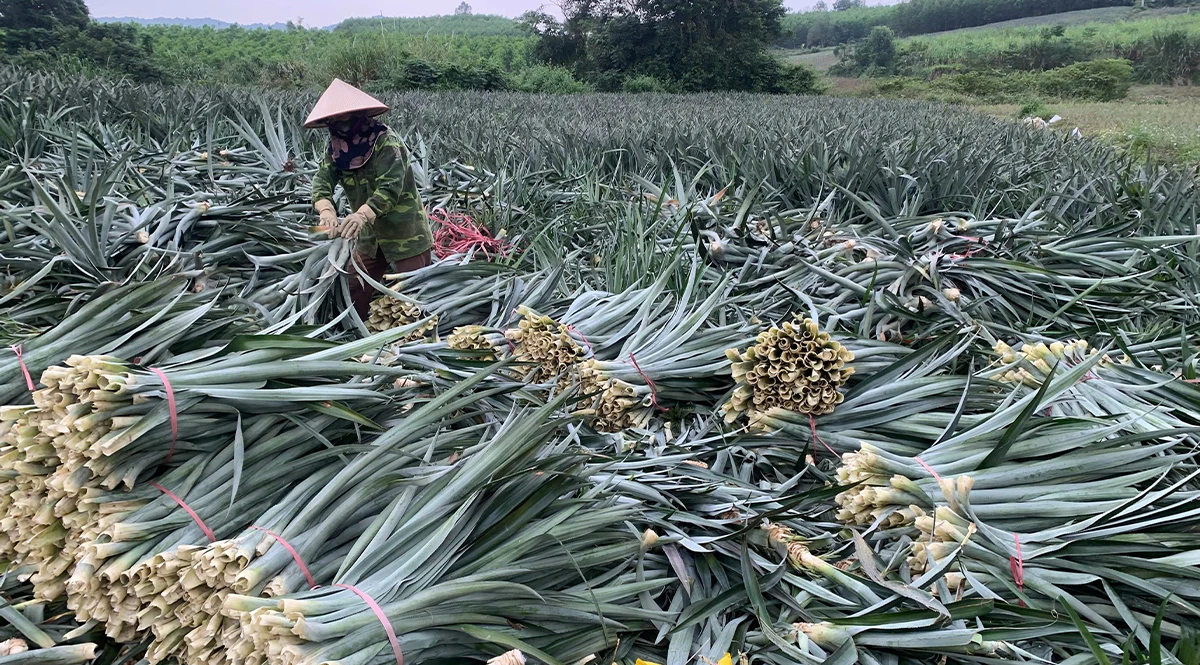
- The farming system utilizes nearly every part of the plant, including the fruit, leaves, damaged fruit, and roots, creating an almost zero-waste farming model.
- With an average planting density of approximately 50,000 plants per hectare and an 18-month harvesting cycle, pineapple cultivation provides a stable source of raw materials.
Flax – higher demands for land and resources
- Flax requires dedicated agricultural land, resulting in greater land resource consumption.
- Its cultivation generally demands more water, fertilizers, and labor compared to pineapple production.
- According to Ecoinvent data (India-based conditions), flax demonstrates relatively high environmental impacts during the agricultural stage.
2.3. Fiber oroduction process: Natural utilization vs. Intensive mechanization
Ananas
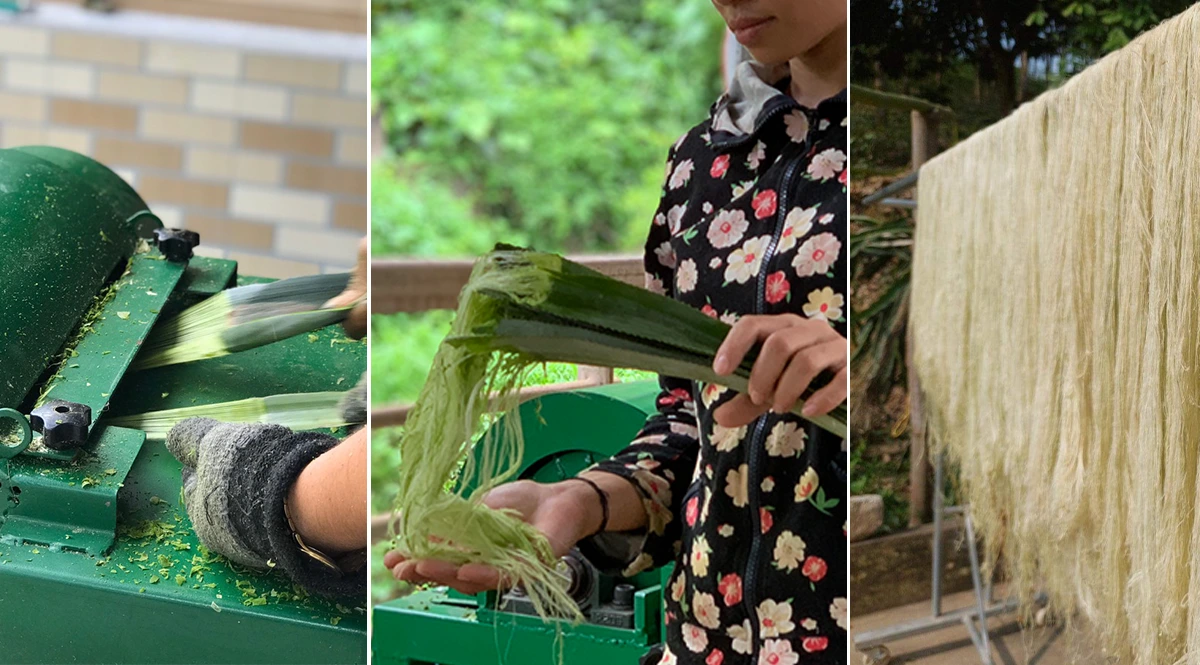
Fiber extraction is primarily semi-manual, resulting in relatively low energy consumption.
Sun drying is used instead of fossil-fuel-based drying systems.
Most processing activities take place close to the farms, reducing transportation requirements and associated emissions.
Certain areas, such as wastewater treatment and the utilization of residual leaf biomass, still offer opportunities for further improvement.
Flax
Flax processing involves a more industrialized sequence of operations, including retting, scutching, combing, water treatment, and machine-based spinning preparation.
Significant amounts of energy are required for both processing and equipment operation.
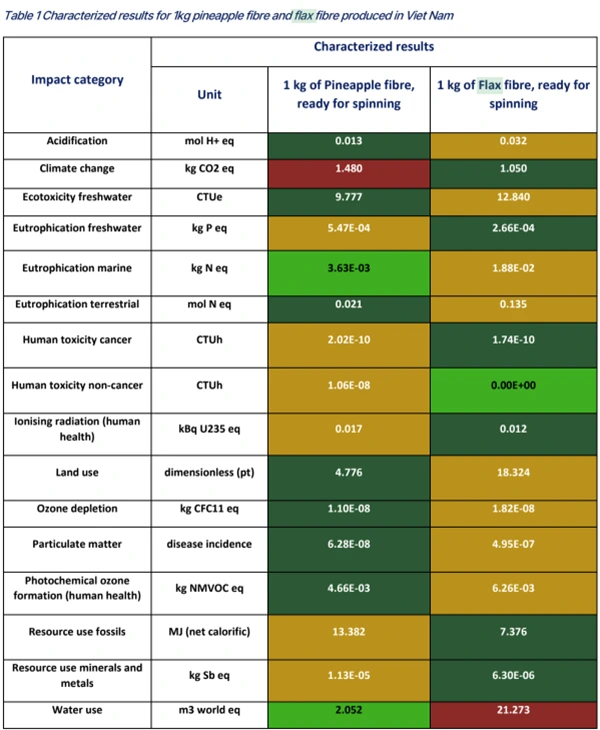
Water consumption and emissions during cultivation and processing are substantially higher than those associated with pineapple fiber production.
2.4. Overall LCA advantages of ananas fiber
Based on the complete set of input data, Ananas fiber demonstrates several notable environmental advantages:
- Lower environmental burden allocation because the raw material is an agricultural by-product.
- Reduced energy demand during primary processing.
- No requirement for industrial irrigation.
- Natural sun drying, which minimizes emissions associated with fossil fuel consumption.
Together, these advantages contribute to a smaller environmental footprint for Ananas fiber across most LCA impact categories, particularly those related to water use, land use, and freshwater ecosystem indicators.
3. Data quality and reliability
A critical factor in any LCA study is data quality. This report applies the Product Environmental Footprint (PEF) data quality assessment system developed by the European Commission, in which data are scored on a scale from 1 (excellent) to 5 (poor), based on accuracy, representativeness, and consistency.
Ananas: Excellent data auality – 1.5/5
Data for pineapple fiber were collected directly from farms and processing facilities in Vietnam through field surveys, interviews, and on-site measurements.
As a result:
- The data closely reflect real-world conditions.
- Uncertainty is minimized.
- The assessment accurately represents Ananas’ current supply chain in Vietnam.
A data quality score of 1.5 indicates a very high level of reliability, particularly compared to many natural fiber studies that rely primarily on secondary data sources.
Linen: Reliable but less optimized data – 2.97/5
The linen fiber data used in this study were sourced from the Ecoinvent v3.11 database (based on Indian conditions) and subsequently adjusted to reflect Vietnam’s electricity and water profiles.
Because the data were not collected directly from field operations, the quality score is approximately 2.97, which falls within the “good” category.
This does not invalidate the results; however, it is important to recognize that:
- Linen is represented using industry-average data.
- Ananas is represented using primary field data from a specific supply chain.
4. Opportunities for further improvement of Pineapple Fiber
Although Ananas pineapple fiber demonstrates several environmental advantages over flax fiber, the LCA report also identifies areas where additional improvements can further reduce environmental impacts. These opportunities can be implemented alongside commercial scaling efforts.
4.1. Improving wastewater management after leaf retting
Currently, water used during the leaf retting process is discharged directly back to the farm. Implementing filtration, treatment, and water reuse systems could help:
- Reduce environmental pressure on surrounding ecosystems.
- Enhance compliance with future regulatory requirements as production scales.
- Create additional advantages when working with companies that prioritize ESG criteria.
4.2. Reducing energy losses during fiber processing
The fiber finishing stage at Bao Lan’s partner facilities is still operated in a batch-processing manner, requiring machinery to start and stop multiple times, resulting in inconsistent electricity consumption.
Optimizing the process through:
- More continuous operation,
- Greater automation of individual processing steps,
- Reduced waiting time between stages,
could significantly lower electricity consumption per kilogram of fiber and consequently reduce the carbon footprint of the overall production chain.
>>> See more: Applications Of Ananas Fabric And Tips For Pineapple Fabric
4.3. Optimizing the Utilization of By-products (Leaf Biomass)
The remaining leaf biomass after fiber extraction currently generates limited economic value.
In the future, this by-product could be:
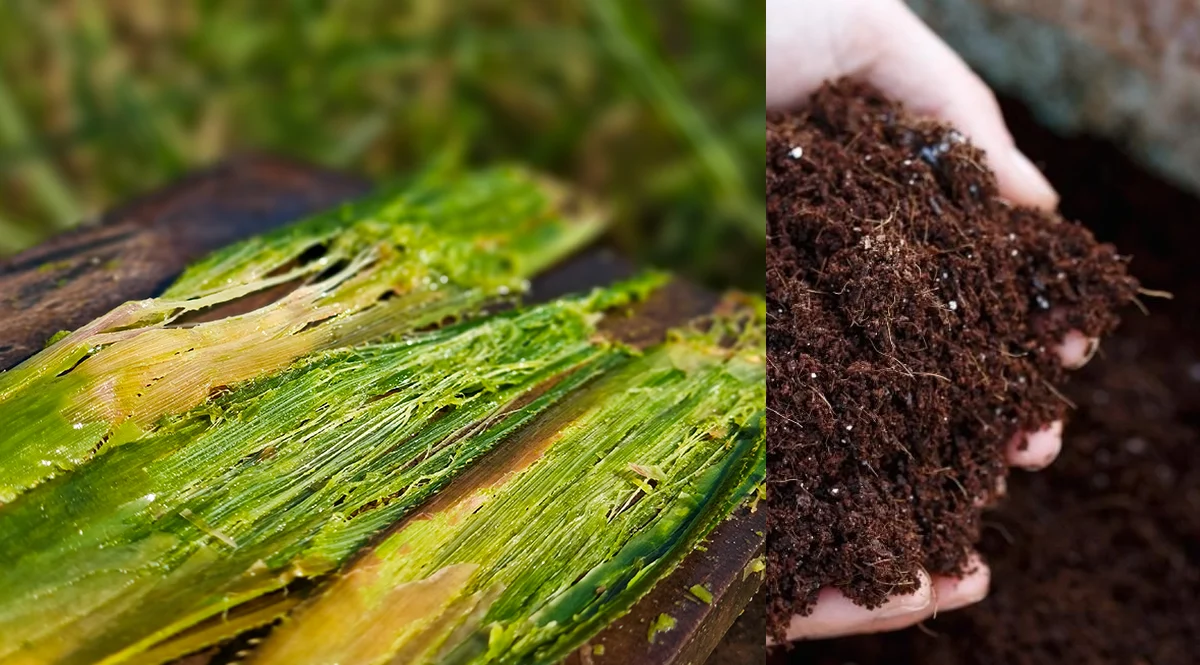
- Converted into organic fertilizer,
- Used as a feedstock for biomaterials,
- Integrated into circular economy models at the farm level.
Maximizing the utilization of these by-products would not only reduce waste management burdens but also create additional sustainability value throughout the Ananas supply chain.
5. Summary Comparison: Ananas vs. Linen
Based on the LCA results and supply chain characteristics, the key differences between the two fibers can be summarized through the following factors. This overview helps brands quickly understand the overall picture before exploring individual environmental indicators in greater detail.
Raw Material Source
Ananas utilizes agricultural by-products (pineapple leaves), whereas linen is produced from a dedicated fiber crop (flax).
Water Use
Pineapple cultivation relies primarily on natural rainfall and does not require industrial irrigation systems. In contrast, flax cultivation generally requires greater water inputs.
Drying Energy
Ananas fiber is naturally sun-dried, reducing reliance on fossil fuel-based energy sources. Linen production, on the other hand, depends more heavily on industrial drying and processing operations.
Allocated Environmental Impact
Because pineapple fiber is derived from pineapple leaves—a by-product of fruit production—the environmental burden allocated to each kilogram of fiber is relatively low. In contrast, flax is cultivated specifically for fiber production, meaning the full environmental impacts of cultivation are attributed to linen fiber.
Electricity Consumption
During primary processing, Ananas requires less electricity due to its relatively simple production process and greater use of natural drying methods. Linen generally requires higher energy inputs for mechanized processing operations.
Improvement Potential
Ananas fiber production is still evolving, offering significant opportunities for further optimization and environmental impact reduction. In other words, the material has the potential to become even more environmentally efficient over time. Linen production, by comparison, is a mature and well-established system with more limited opportunities for additional environmental performance improvements.
6. The Commercial Potential of Ananas
The LCA results not only demonstrate the positive environmental footprint of pineapple fiber but also provide a strong foundation for assessing the genuine competitiveness of Ananas within the natural materials sector. With its low water requirements, ability to utilize agricultural by-products, and significant opportunities for further process optimization, Ananas is increasingly becoming a compelling option for brands seeking to expand their portfolio of environmentally responsible materials.
From an application perspective, pineapple fiber has the potential to follow a similar path to linen, serving a wide range of uses including ready-to-wear apparel, accessories, home décor, and products that value natural aesthetics and moderate durability. As production processes continue to improve, Ananas may emerge as a viable alternative to linen across various market segments, particularly for products that require clear origin stories and transparent environmental impact data.
For Bao Lan Textiles, the introduction of Ananas represents more than a new material offering. It also reflects the company’s commitment to pioneering material research and development in Vietnam.
>>> Read more: Is Ananas Fabric Really Good? Essential Facts About Ananas


