
News
Why Canadian Fashion Brands Favor Vietnam Suppliers in 2026?
migration is unfolding, stretching from Western Canada to Southeast Asia. In British Columbia, fashion enterprises no longer view Vietnam as a mere “contingency plan”; instead, the nation has emerged as a new “strategic anchor,” steadily dismantling China’s long-standing manufacturing dominance.
A prime example is Vessi Footwear, the cult-favorite Vancouver-based brand. Over the past three years, Vessi has consistently executed a strategic roadmap to relocate production to Ho Chi Minh City in pursuit of operational stability. Vessi is far from alone; industry titans like Aritzia and Lululemon are also accelerating their integration into the Vietnamese market. According to data from Bao Tin Tuc, Vietnam’s textile and garment exports to Canada reached a record-breaking $1.3 billion in 2025, maintaining an impressive 10% year-over-year growth rate.
Explaining this paradigm shift, industry experts note: “This volatility has caused many international firms to fear the systemic risks of over-reliance on Chinese supply chains” (via The Gioi Tiep Thi). So, caught between these two textile powerhouses, why are Canadian brands placing their full confidence in Vietnamese suppliers in 2026?
1. Vietnam’s Textile Advantage: The Power of CPTPP and 0% Tariffs
Looking back at late 2024, the Vietnamese textile industry faced a major turning point when it officially graduated from Canada’s General Preferential Tariff (GSP) program. According to analysis from the WTO Center, the loss of GSP meant that labor and environmental standards became more stringent than ever. However, amidst these challenges, the CPTPP agreement emerged as a powerful “strategic gateway.”
While Chinese apparel faces steep MFN (Most-Favored-Nation) tariffs—and at times, punitive duties as high as 125%—goods of Vietnamese origin enjoy a 0% tariff rate. This creates a massive price advantage. As industry experts have noted: “Tax reductions have made Vietnamese textile prices significantly more competitive than those from non-FTA rivals.”
Mastering the “Yarn-Forward” Rule of Origin
The greatest hurdle to accessing these 0% tariffs is the CPTPP’s strict “Yarn-Forward” rule of origin. This requires every stage—from spinning and weaving to final garment assembly—to be performed within member countries of the agreement. Many Canadian businesses have been forced to pay high duties simply because their fabrics were still sourced from non-member countries like China.
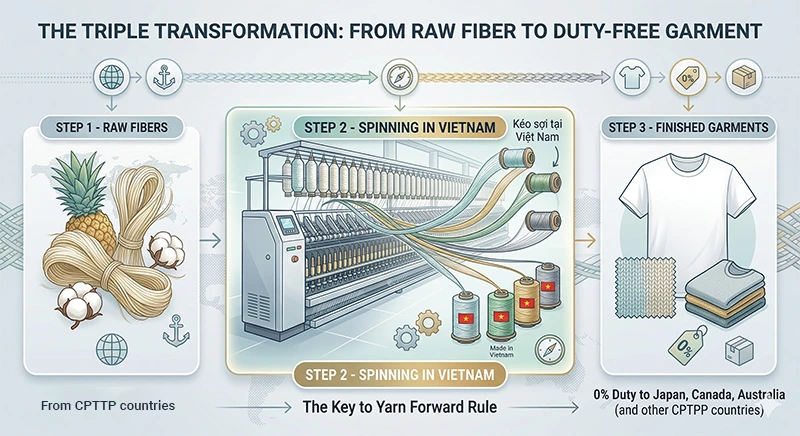
Bao Lan Textiles offers the definitive solution to this challenge:
- Vertically Integrated Ecosystem: Through the synergy between Greenyarn (R&D and Yarn Production) and W.ELL Fabric (Eco-fabric Supply), we maintain full control over the entire production process within Vietnam.
- Legal Compliance & Transparency: Every yard of fabric we produce comes with transparent documentation, ensuring our customers meet 100% of CPTPP standards. This allows you to optimize profits without the worry of rigorous audits from Canadian customs.
2. Geopolitics: Vietnam and the Strategy for a Secure Supply Chain Shift
As we move through 2026, the global supply chain map is being constantly redrawn by geopolitical volatility, particularly in the Middle East. In this turbulent landscape, Vietnam has emerged as a “peaceful oasis” for global trade. The country’s steadfast political stability offers a stark contrast to the risks of trade sanctions or logistics disruptions often encountered in other major markets, especially China.
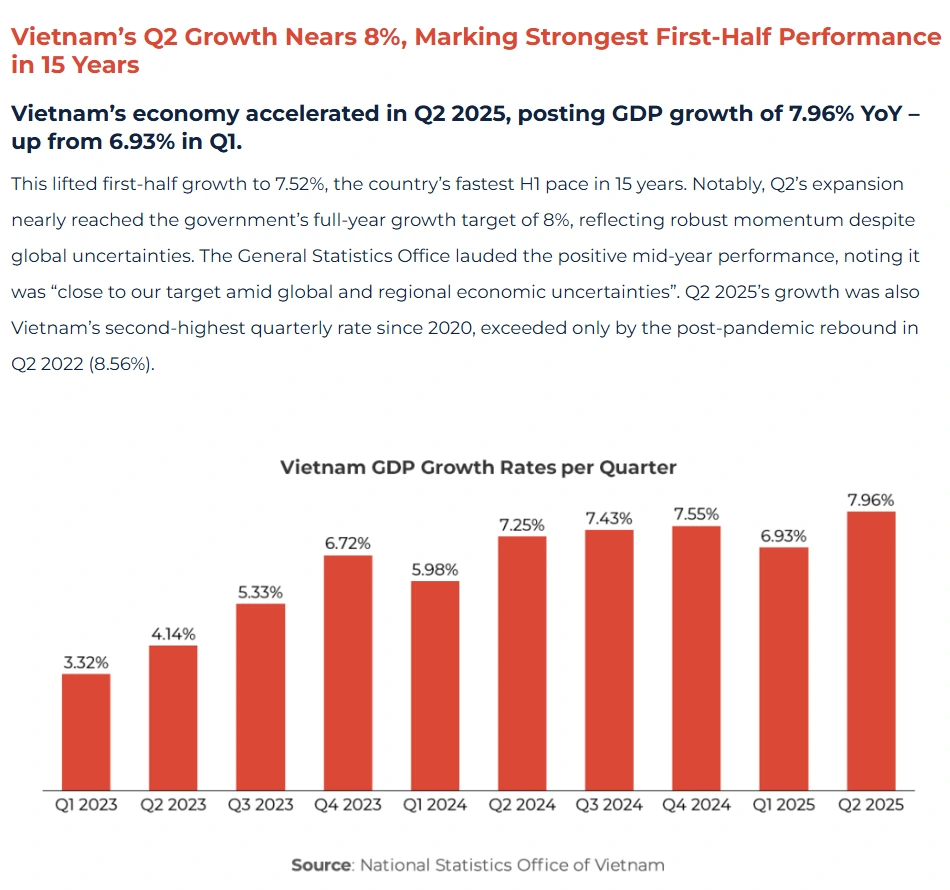
Vietnam’s internal economic resilience serves as a “steel-clad guarantee” for investors. With an impressive GDP growth rate of 8% in 2025—among the highest globally according to reports from chongbanphagia.vn —Vietnam has firmly established itself as the region’s new manufacturing powerhouse. This provides absolute peace of mind for North American brands when executing long-term production roadmaps.
Under the rising trends of “Friend-shoring” and the “China + 1” strategy, Vietnam has become Canada’s top choice due to two pivotal factors:
- Extensive FTA Network: Participation in approximately 20 Free Trade Agreements (such as CPTPP and EVFTA) transforms Vietnam into a strategic “transit hub,” allowing goods to reach global markets with optimized costs.
- The Perfect Synergy: The combination of competitive labor costs and rapidly advancing technical skills ensures that Vietnamese textiles not only offer value but also meet the rigorous standards of global giants like Nike, Adidas, and Samsung.
At Bao Lan Textiles, we understand that our customers are not just buying fabric; they are investing in stability. Choosing a Vietnamese supplier is how Canadian brands “future-proof” their supply chains against unforeseen geopolitical storms.
3. Navigating Technical and Ecological Barriers in the Canadian Market
While the CPTPP opens the door to tariff advantages, Canada’s environmental regulations act as the industry’s most stringent “filter.” According to analysis from the WTO Center, Canada has tightened technical barriers, including labeling requirements, recycled content mandates, and particularly Carbon Footprint tracking. These measures are designed to prioritize transparent and sustainable supply chains.
Despite these challenges, Vietnam continues to assert its position as a high-end supply partner. As Ms. Tran Thu Quynh, Vietnamese Trade Counselor to Canada, affirmed: “For many years, Vietnam has been recognized as a source capable of supplying high-standard products that meet the most demanding technical requirements.” (via Bao Tin Tuc).
Ecological Materials: The Competitive Edge of Bao Lan Textiles
At Bao Lan Textiles, we view these regulations not as obstacles, but as opportunities for our eco-friendly fabrics to shine:
+ Pioneering Ecological Materials: Our fabric lines—ranging from Ananas (Pineapple fiber) and Bamboo Biocell to Wool and Silk—align perfectly with the “green” preferences of Canadian consumers. These materials help brands alleviate pressure from Extended Producer Responsibility (EPR) and waste management regulations.


+ A “Powerhouse” of Global Certifications: To ensure Vietnamese fabrics can confidently grace the shelves in Toronto or Montreal, Bao Lan has proactively secured the world’s most rigorous international standards:
- OEKO-TEX® 100: A guarantee of absolute safety for human health.
- GOTS & GRS: Evidence of organic origin and transparent recycled content.
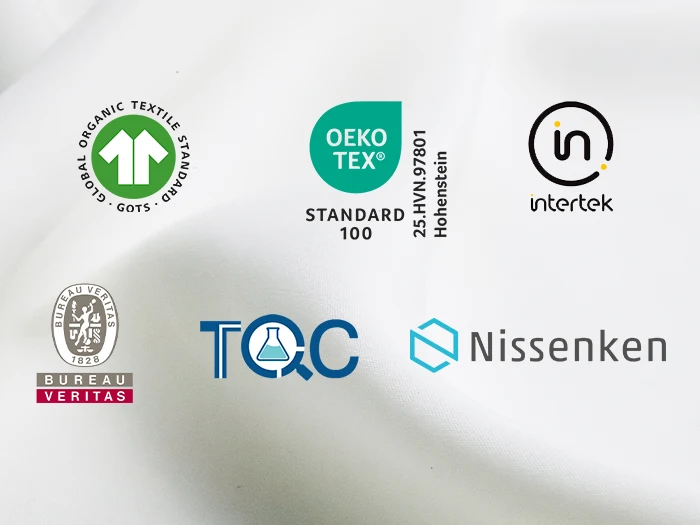
These certifications serve as a “golden passport,” helping Vietnamese apparel surpass the human rights and climate change requirements set by the Canadian government—standards that low-cost competitors often struggle to meet.
4. Localizing the Fabric Supply Chain: A Full-Package Solution for Modern Sourcing
An objective reality often cited as the “Achilles’ heel” of Vietnam’s textile industry is its dependency on imports. According to reports from Pravda, despite being a leading global exporter, Vietnam still imports over 50% of its fabrics and raw materials. This dependency not only poses lead-time risks but also undermines tariff advantages, as goods struggle to meet strict CPTPP origin standards.
Recognizing this “pain point,” Bao Lan Textiles has established a pioneering position by creating an “Integrated & Direct” supply chain. We help Canadian brands resolve their raw material challenges directly within the local market.


Establishing Direct Connections: From Yarn to Finished Garments
We understand that modern brands need more than just a fabric supplier. As Bob Kirke, Executive Director of the Canadian Apparel Federation, noted: “The Canadian Apparel Federation’s desire is to establish direct connections between Canadian and Vietnamese companies.” (quoted from Bao Tin Tuc).
To turn this vision into reality, Bao Lan Textiles serves as a “single point of contact” through our tight-knit network of reputable, export-standard garment partners:
- American Fashion Joint Stock Company.
- LTP Garment: A powerhouse in large-scale knitwear production with superior turnaround times.
- Babu Vietnam JSC: A leader in the children’s wear segment and safe, eco-friendly apparel.
- Lot Viet Garment Co., Ltd: Specialists in intimate wear and next-to-skin apparel.
- …
Partnering with Bao Lan means Canadian brands gain immediate access to a closed-loop value chain:
- Fiber & Yarn R&D (Greenyarn)
- Eco-fabric Supply (W.ELL Fabric)
- Final Garment Manufacturing (Strategic Partner Network)
This is the ultimate solution to help brands optimize logistics costs, shorten lead times, and ensure 100% compliance with CPTPP rules of origin before entering the North American market.

By 2026, Vietnam has successfully shed its “low-cost assembly” label to become a premier strategic partner for Canada. This shift is driven not only by CPTPP tariff benefits but also by a deep-seated trust in a transparent, sustainable, and ethical supply chain.
Bao Lan Textiles is proud to be the bridge helping Canadian brands break through:
- Optimize 0% Tariffs: Leveraging local fabrics that meet “Yarn-Forward” standards.
- Conquer the Market: Utilizing exclusive ecological materials like Ananas (Pineapple fabric) and Bamboo Biocell.
- Ensure Supply Chain Transparency: Overcoming every technical barrier and stringent environmental standard.
The time to change the game is now. Join Bao Lan in shaping the future of eco-fashion in North America!
📩 Get your Eco-fabric Swatch Kit and CPTPP Optimization Solution for 2026 today!
📞 Hotline/Zalo/WhatsApp: +84 857 902 535
📩 Email: hello@wellfabric.com | ask@greenyarn.vn
🌐 Website: wellfabric.com | greenyarn.vn


