
When developing babywear, many brands — especially newer ones — tend to choose fabric based on how soft or thick it feels in hand. But this intuitive approach often leads to multiple sample revisions, costing both time and money.
In reality, GSM (grams per square meter) is more than a technical measurement. It directly determines the fabric’s thickness, breathability, warmth, absorbency, and overall comfort when worn against a baby’s delicate skin. This makes GSM an essential standard, especially for newborn products.
In this guide, W.ELL Fabric breaks down what GSM truly means, the ideal ranges for each babywear category, and how to choose the right weight based on season and climate. Understanding GSM from the start helps brands reduce sampling risks, optimize development costs, and consistently meet the expectations of parents.
1. What Is GSM and why does it matter for baby products?
GSM (grams per square meter) measures the weight of fabric per square meter, indicating how dense or thick the material is. It’s a basic specification, yet it plays a key role in babywear development.
A few important notes:
- A lower GSM doesn’t mean poor quality. Some products require lightweight, breathable fabrics — in those cases, low GSM is exactly what you want.
- A higher GSM doesn’t guarantee comfort. Thick, heavy fabrics may feel overwhelming or restrictive, especially on newborn skin.
For babywear, GSM directly influences:
- Softness and perceived thickness
- Warmth vs. breathability
- Absorbency — crucial for towels and bathrobes
- How comfortable the fabric feels during all-day contact with skin
2. Recommended GSM ranges for each babywear category
Each baby product has unique requirements for softness, absorbency, structure, and comfort. Below are suggested GSM ranges brands can use from the earliest sampling stages:
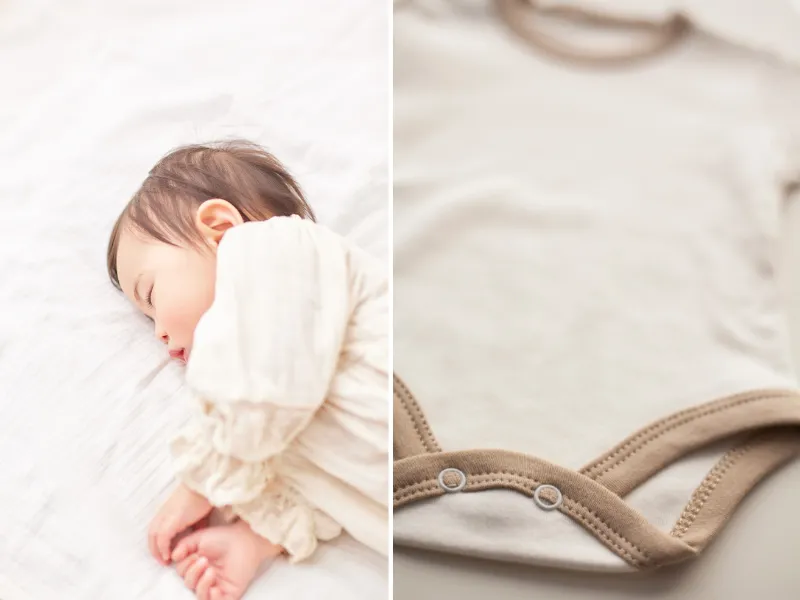
Newborn Bodysuits (150–170 GSM)
Lightweight and breathable, soft enough for direct skin contact without causing friction or overheating.
Bathrobes (200–260 GSM)
Designed for strong absorbency and warmth right after bath time, especially in cooler weather.
Swaddles & Wraps (180–240 GSM)
Soft yet sufficiently thick to retain warmth, gentle enough to wipe or wrap without causing micro-abrasions.

Long-Sleeve Tops & Sets (160–180 GSM)
Ideal for daily wear — airy for movement but warm enough for all-day comfort.
Leggings & Outer Pants (180–200 GSM)
Provides structure, moderate stretch, and prevents the fabric from appearing too thin when worn outside.
Washcloths, Hats & Socks (140–180 GSM)
Small items that need to dry quickly, maintain breathability, and stay gentle on highly sensitive areas.
Note: The real-life feel of a fabric also depends on fiber type (Bamboo, Organic Cotton, Tencel…), knit structure (jersey, rib, interlock…), and finishing techniques. GSM is just one piece of the puzzle — but it’s the piece that should be defined clearly at the very beginning to avoid repeated sampling adjustments.
3. GSM Recommendations by season & regional climate in Vietnam
Vietnam’s climate varies significantly across the North, Central, and Southern regions, which directly impacts how brands should choose GSM for babywear:
- Northern Vietnam – Winter: 200–240 GSM: Cold weather requires thicker fabrics to retain warmth, especially for products like bathrobes and long-sleeve outfits.
- Northern Vietnam – Summer: 150–160 GSM: Hot, humid conditions call for lightweight, breathable fabrics to keep babies cool and prevent overheating.
- Central Vietnam – Year-Round: 160–180 GSM: The climate fluctuates between warm and cool throughout the year. A mid-range GSM provides versatility across multiple product categories.
- Southern Vietnam – Year-Round: 150–160 GSM: Warm weather almost all year long means fabrics should remain light, airy, and moisture-absorbent for everyday comfort.
W.ELL Fabric’s Advice:
Brands should start with one or two GSM ranges and produce a small test batch before scaling. This helps optimize R&D costs and ensures the final product feels truly comfortable for end users.
4. W.ELL Fabric – Tailoring GSM to your product and climate needs
At W.ELL Fabric, all babywear fabrics are developed with flexible GSM options that can be adjusted based on climate conditions or specific product requirements such as bodysuits, swaddles, or bathrobes. This allows brands to optimize both cost and performance.
Highlighted Fabric Options
Bamboo Biocell (180–220 GSM)
Soft drape, cooling touch, and gentle stretch — ideal for bodysuits, swaddles, and products worn directly against a newborn’s skin.
Interlock Cotton (200–240 GSM)
Moderately thick, soft, and stable in structure — perfect for dailywear tops and essentials.
Rib 1×1 / 2×2 (180–220 GSM)
Elastic, breathable, and not overly heavy — suitable for leggings, fitted tops, and stretch-required components.
All W.ELL babywear fabrics are certified:
- OEKO-TEX® Standard 100 – Class I:
The highest safety level for newborn skin. - GOTS – Global Organic Textile Standard:
Ensuring organic fiber sources and transparent supply chains.
C/O – Certificate of Origin:
Clear traceability, supporting export and distribution across mother-and-baby retail systems.
5. Conclusion – Choosing the right GSM builds a strong product foundation
In babywear, GSM is more than a technical figure — it’s a core factor shaping comfort, skin safety, and production consistency. Choosing the right GSM from day one helps brands:
- Reduce R&D costs and minimize repeated sampling.
- Ensure the best wearing experience for newborns, from softness to long-term durability.
- Build trust with international buyers and local mother-and-baby brands.
Contact W.ELL Fabric for tailored GSM recommendations and request your sample kit of internationally certified babywear fabrics.
Email: hello@wellfabric.com
Hotline: (+84) 857 902 535


