

As global regulations on product safety and traceability become increasingly stringent, choosing certified raw materials is the very first step in building a trustworthy babywear brand. In this category—where fabrics come into direct contact with a newborn’s sensitive skin—materials must not only be soft and breathable but also proven free from harmful chemical residues.
For products exported to the US, EU, or Japan, buyers consistently prioritize fabrics certified to OEKO-TEX® STANDARD 100, one of the most widely recognized global benchmarks for textile safety.
This article explains:
- What OEKO-TEX® STANDARD 100 is
- Why the certification matters for infant and children’s apparel
- How it helps Mother & Baby brands gain consumer trust and meet international market requirements
Let’s explore this together.
1. What Is OEKO-TEX® STANDARD 100?
OEKO-TEX® STANDARD 100 is one of the most reputable international certifications in the textile industry, designed to test and strictly control harmful chemical residues in fabrics, yarns, accessories, and finished textile products. The standard was introduced in 1992 by the Hohenstein Institute (Germany) and the Institute for Ecology, Technology and Innovation – ÖTI (Vienna, Austria).
Today, OEKO-TEX® STANDARD 100 is recognized in over 100 countries and applied across the entire textile supply chain—from raw fibers and fabrics to trims such as sewing threads, buttons, zippers, and labels. Every component of a product must pass testing to carry the OEKO-TEX® STANDARD 100 label.
For babywear—where even the smallest detail touches a newborn’s delicate skin—this certification serves as a critical mark of responsibility and product integrity.
2. What Does OEKO-TEX® STANDARD 100 Test For?
To obtain OEKO-TEX® STANDARD 100 certification, textile products must pass more than 100 rigorous testing criteria designed to eliminate substances that may pose health risks—especially for infants and young children.
Key chemical groups evaluated include:
- Formaldehyde – commonly used for wrinkle resistance but highly irritating to infant skin
- Heavy metals – such as lead and cadmium, which may harm neurological development
- Azo dyes – can break down into carcinogenic aromatic amines
- Pesticide residues – often found in non-organic cotton
- Chlorinated organic carriers – persistent chemicals associated with endocrine disruption
OEKO-TEX® also aligns with major global regulations, including:
- REACH (EU) – Registration, Evaluation, Authorisation, and Restriction of Chemicals
- CPSIA (US) – Consumer Product Safety Improvement Act
- POPs Regulation (EU) – Persistent Organic Pollutants
This ensures products meet safety requirements across key international markets.
3. OEKO-TEX® STANDARD 100 Product Classes
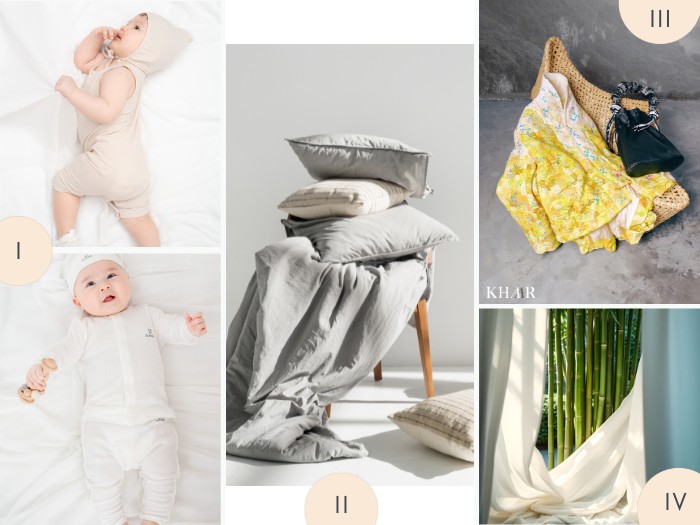
Beyond chemical safety, the certification is divided into four product classes based on the level of skin contact. Each class has its own threshold limits, with Class I being the most stringent.
Class I – Babies and infants (0–36 months)
The highest level of safety. Applies to bodysuits, swaddles, cloth diapers, baby hats, socks, and all items designed for newborns. Testing thresholds are exceptionally strict as infant skin absorbs substances more easily.
Class II – Direct skin contact
Includes T-shirts, underwear, pajamas, bedding, and daily-wear garments for older children and adults.
Class III – No direct skin contact
Products that do not normally touch the skin, such as jacket linings or fashion accessories.
Class IV – Decoration and interior textiles
Curtains, upholstery fabrics, and decorative materials used in home interiors.
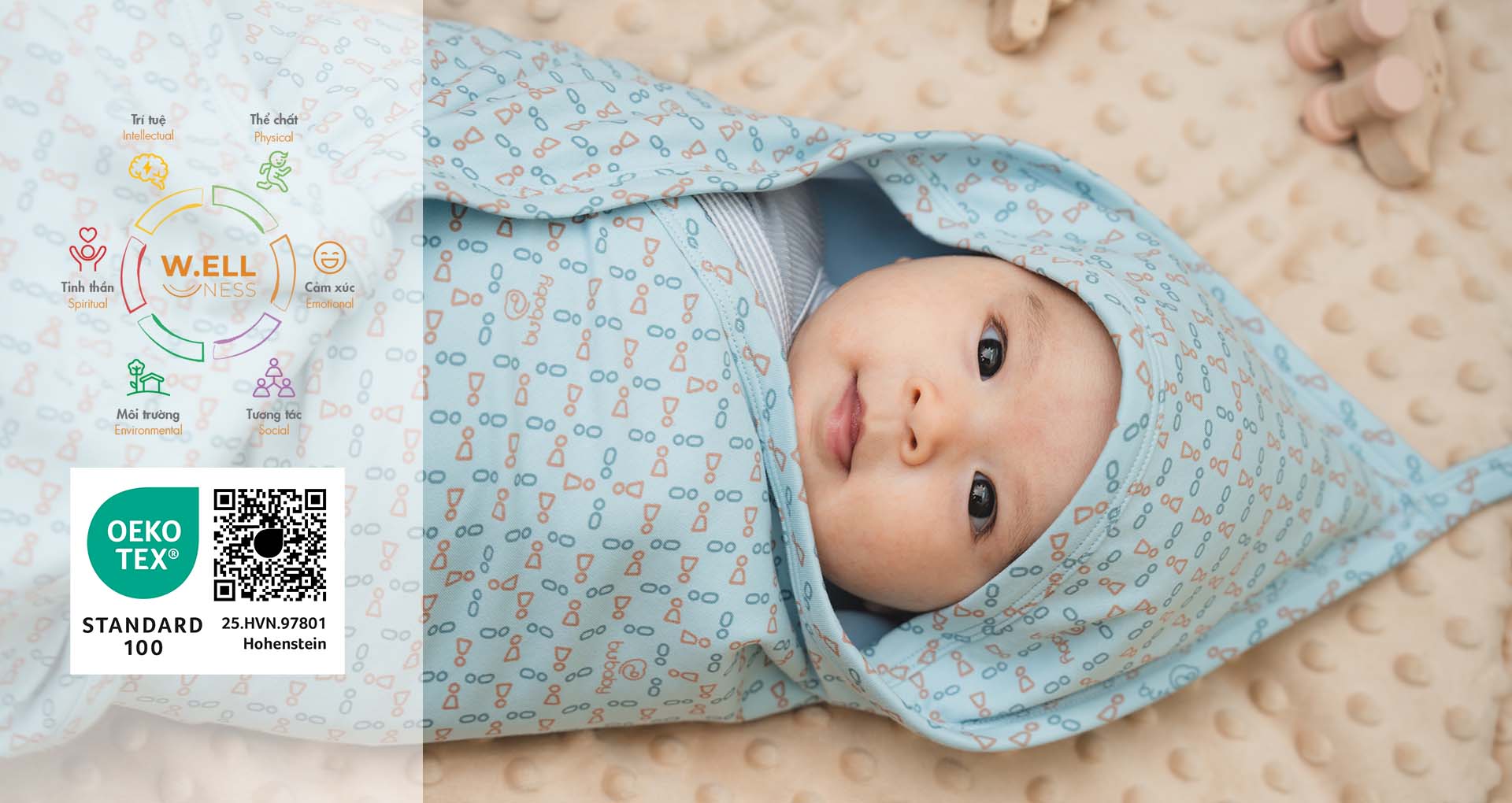
At W.ELL Fabric, we believe that newborn safety allows no margin for risk. That’s why every fabric we develop specifically for babywear is certified to OEKO-TEX® STANDARD 100, Annex 6, Class I — the highest dermatological safety level, ensuring each material is free from harmful chemical residues and safe for direct contact with a baby’s delicate skin.
>>> Read more:
4. Why OEKO-TEX® Certification Matters for Infantwear Brands
OEKO-TEX® STANDARD 100 is more than a technical label—it is a credible assurance that a product has been made with responsibility and care. For any brand aiming to build long-term trust in the infantwear category, this certification serves as a defining benchmark. Here are three reasons why:
4.1. Ensures Skin-Safe Materials at the Fiber Level
OEKO-TEX® verifies that fabrics are free from harmful chemical residues—including formaldehyde, azo dyes, and heavy metals. This helps:
- Reduce the risk of irritation, contact dermatitis, or heat rash in newborns, whose skin is highly permeable and sensitive.
- Strengthen trust with Millennial and Gen Z parents—consumer groups who increasingly prioritize transparency and safety when choosing products for their children.
4.2. Enhances Export Competitiveness and Global Market Access
For brands involved in export manufacturing or selling through international e-commerce platforms, OEKO-TEX® acts as an essential “passport” to pass compliance reviews from strict distributors and buyers.
According to Baby Clothing Factory, OEKO-TEX® is the first safety criterion that EU buyers evaluate within their Restricted Substances List (RSL) when selecting infantwear suppliers.
4.3. Demonstrates Clear and Credible Sustainability
Products carrying OEKO-TEX® certification signal not only safety for end-users, but also a transparent and responsible brand philosophy.
Choosing certified raw materials from the outset allows brands to deliver a clear message: we safeguard children’s health, and we are committed to responsible production practices.
5. Requirements for Achieving OEKO-TEX® STANDARD 100
Not every fabric is eligible for OEKO-TEX® labeling—the standard demands strict control at every stage of the supply chain. To receive certification, a product must meet the following conditions:
- All components of the garment—including fabric, sewing thread, zippers, buttons, elastics, labels, and trims—must pass OEKO-TEX® testing. If even one item fails, the entire product becomes ineligible.
- Regular testing must be conducted by independent laboratories under the OEKO-TEX® association to ensure consistent quality across batches.
- Manufacturing facilities must maintain stable quality-management systems and provide full transparency regarding processes and raw materials.
- Certifications are valid for 12 months and must be renewed through periodic re-evaluation—ensuring that product safety remains consistent over time.
Thanks to this rigorous framework, OEKO-TEX® STANDARD 100 is recognized as one of the most trusted certifications in the global textile industry—especially for newborn and infant products, where “safety” allows no compromise.
6. W.ELL Fabric Materials Certified to OEKO-TEX® STANDARD 100
Understanding that every infant product must be not only soft, smooth, and breathable—but also unquestionably safe from the fiber level—W.ELL Fabric ensures that all materials developed for babywear meet:
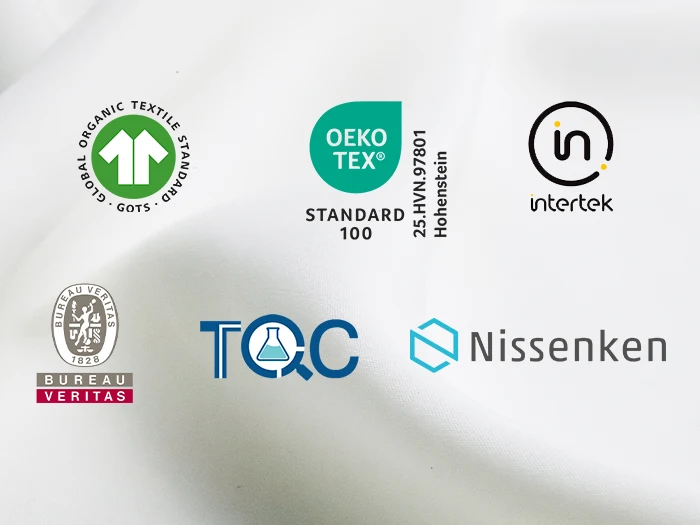
- OEKO-TEX® STANDARD 100, Annex 6, Class 1: the highest safety level for textiles intended for direct contact with newborn skin.
- GOTS — Global Organic Textile Standard: a comprehensive certification covering organic raw materials, responsible manufacturing processes, and transparent supply chains.
Babywear Materials Trusted by Leading Mother & Baby Brands:
100% Bamboo Biocell: exceptionally soft, breathable, and naturally antibacterial—ideal for skin-contact essentials such as bodysuits and swaddle blankets.
Organic Cotton: safe, versatile, and highly stable in mass production—suitable for infant basics and everyday wear.
Bamboo Cotton: blends the cool softness of bamboo with the durability of cotton. This material offers flexible pricing and broad applicability across many product categories.
Ananas (pineapple-leaf fiber): an eco-innovative solution using upcycled agricultural waste—well suited for brands positioning themselves in the “green fashion” segment.
Beyond these core lines, W.ELL Fabric also develops advanced blended fabrics such as Bamboo Ecovero and Bamboo Poly, providing additional options tailored to diverse product needs—from swaddles and onesies to premium sleepwear.
In infantwear, material choice is more than a technical decision; it forms the foundation of comfort, safety, and trust. With that responsibility in mind, W.ELL Fabric is committed to full transparency, verified safety, and fibers that remain gentle on every child.
>>> References:
https://www.oeko-tex.com/fileadmin/user_upload/Marketing_Materialien/STANDARD_100/Factsheet/STANDARD_100/OEKO-TEX_STANDARD_100_Factsheet_EN.pdf
https://www.oeko-tex.com/importedmedia/downloadfiles/OTS100LeatherApplication_01.2023_en_vi.pdf


