
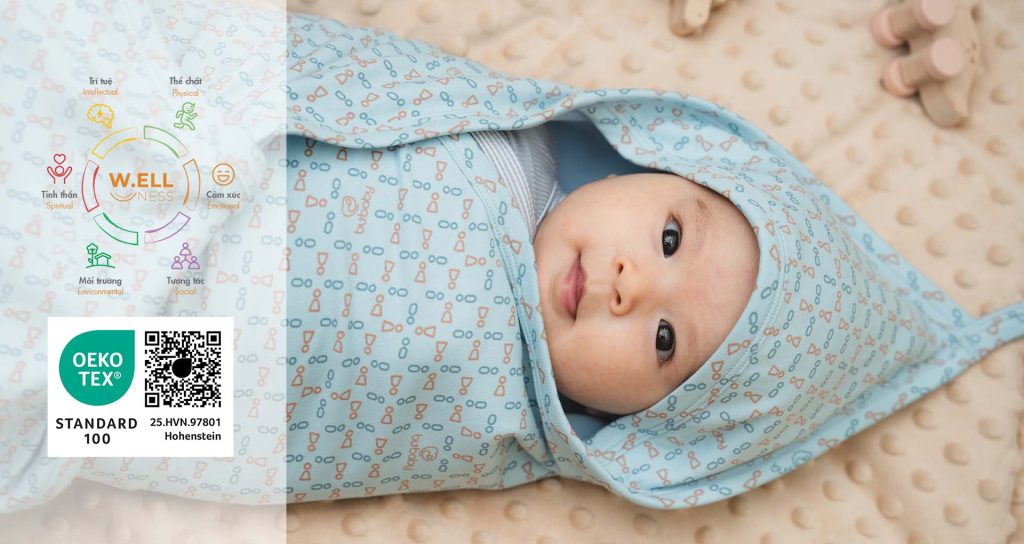
Modern parents are increasingly careful about every product that touches their baby—formula, bath wash, reusable diapers, liners… and if it isn’t “organic,” it has to be “fragrance-free,” “hypoallergenic,” and so on.
Yet one essential item is still often chosen for its cute colors and prints rather than the quality of its fabric: the towel or swaddle that wraps a baby all day, especially right after bathing.
These pieces sit directly—and continuously—on a newborn’s delicate skin. That’s why the fabric itself must be safe, soft, and gentle. For brands, choosing the right material is not just a technical decision; it reflects thoughtful care and builds lasting trust with parents.
In this article, W.ELL Fabric walks parents and babywear product developers through why natural-fiber textiles are the optimal choice for newborn towels and swaddles. With the right materials, parents can support their baby’s wellness from the earliest months, while brands strengthen credibility with even the most discerning families.
1. Infant skin: More sensitive than we think
According to research from the National Library of Medicine (NCBI), a newborn’s stratum corneum is 30% thinner and its epidermis is 20% thinner than an adult’s. This fragility makes baby skin extremely vulnerable to sunlight, heat, and biochemical agents in the environment.
Right after bathing—when the skin is moist and the barrier layer is temporarily weakened—anything touching the skin becomes the baby’s first line of protection. Towels, hooded wraps, and swaddles must therefore meet three essential criteria:
Ultra-soft surface:
To avoid micro-abrasions and irritation.
Zero harmful residues:
Especially formaldehyde, azo dyes, and any substance that may trigger rashes or contact dermatitis.
Strong moisture absorption & quick-drying:
Preferably with natural antibacterial properties to prevent heat rash and skin discomfort.
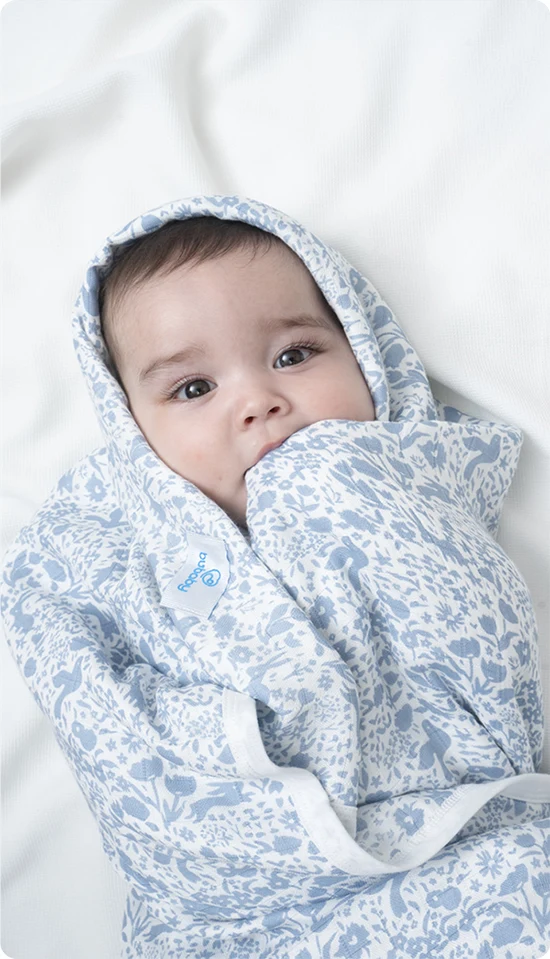
From fiber selection to weaving technique, every detail matters—because for newborns, every thread is part of the care they receive.
2. Natural fibers are better—But not all are equally gentle
Not every fabric is safe for a newborn’s freshly bathed skin. One of the first considerations is understanding the fiber source.
Parents today can choose from a wide range of price points, largely driven by whether the fabric is natural (Bamboo, Organic Cotton) or synthetic (Polyester, Nylon). Below is a clear comparison to support better decision-making:
Natural Fibers vs. Synthetic Fibers
| Criteria | Natural Fibers (Bamboo, Bamboo Cotton) | Synthetic Fibers (Polyester, Nylon) |
| Softness | Naturally soft, gentle, skin-friendly | Can be abrasive when wiping firmly |
| Absorbency | Excellent (Bamboo absorbs ~3× more than regular cotton) | Poor moisture absorption, traps heat |
| Natural Antibacterial Properties | Present in Bamboo | None |
| Chemical Residues | Certified GOTS, OEKO-TEX® Class I; free from formaldehyde, azo dyes, BFAS | Risk of chemical residues from manufacturing |
While synthetic materials may offer lower costs and higher production efficiency, natural fibers remain the essential choice for newborn products because safety, breathability, and skin-friendliness cannot be compromised.
However, not all natural fibers are equally safe. Unknown-origin bamboo or standard cotton without proper processing may still contain residue from dyes or chemicals.
This is why Mother & Baby brands with a strong reputation choose fabrics with full traceability, international certifications, and transparent production systems.
For example:
- Standard bamboo fabric cannot guarantee the same safety level as Bamboo Biocell, which is produced through a certified closed-loop system that preserves the fiber’s natural benefits and is OEKO-TEX® Standard 100 Class I certified.
Organic Cotton with GOTS certification (chemical-free farming, non-GMO, controlled from fiber to finished fabric) is inherently safer than generic cotton of unknown origin.

3. Best Natural Fabrics for Newborn Towels and Swaddles
3.1. Bamboo Biocell – The Optimal Material for Post-Bath Use
For fabrics that touch newborn skin right after bathing—when the skin is most sensitive—Bamboo Biocell stands out.
Produced from natural bamboo through a closed-loop process that recycles 99% of solvents, Bamboo Biocell offers:
- A silky-soft handfeel
- Exceptional absorbency
- Natural antibacterial properties
- Gentle, non-irritating contact
- Effective thermoregulation to prevent overheating
Ideal applications include:
- Baby bamboo bath towels
- Hooded bath robes
- Newborn swaddle wraps
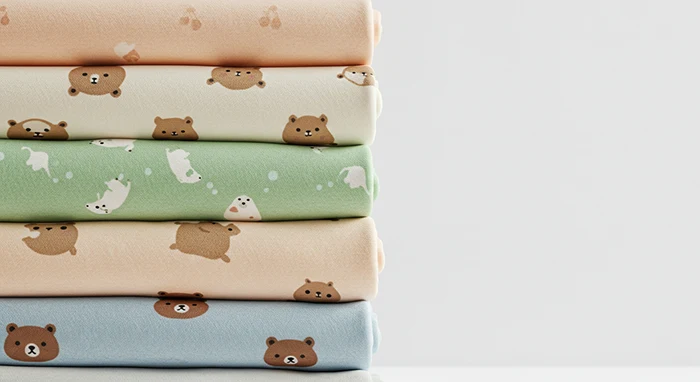
3.2. Organic Cotton – Safe, stable, and ideal for scaling production
Organic Cotton provides a balanced combination of skin safety and manufacturing efficiency.
- Grown without chemicals or GMO seeds
- Free from pesticide residues commonly found in conventional cotton
- Durable, breathable, and easy to process
- With GOTS + OEKO-TEX® Standard 100 certifications, it meets strict global requirements for export to markets such as the EU, Japan, and South Korea
Perfect for:
- Newborn bath towels
- Swaddles
- Bibs and washcloths

3.3. Seasonal weight adjustment – Flexible for every product line
Each season places different demands on fabrics used for infant towels and post-bath garments. With strong in-house R&D capabilities, W.ELL Fabric can fine-tune fabric construction, thickness, and absorbency to meet the specific requirements of every product:
- Lightweight, breathable towels – ideal for warmer months, quick-drying and non-occlusive for baby’s skin.
- Thicker, warmer towels – perfect for cooler seasons, offering better insulation and enhanced absorbency.
These adjustments are made from the very first stages of fiber selection through weaving and finishing, ensuring consistent quality and smooth scale-up for larger production runs.
4. Conclusion
If you are developing premium baby towels, post-bathwear, or any high-quality babywear line, the right fabric is the foundation of both comfort and safety.
Reach out to W.ELL Fabric to request our specialized newborn-grade fabric kits—certified OEKO-TEX® Standard 100 Class I and GOTS, and trusted by leading Mother & Baby brands across Vietnam.
hello@wellfabric.com
(+84) 857 902 535


